Peoria Hard Water Problems: Why You Need a Softener

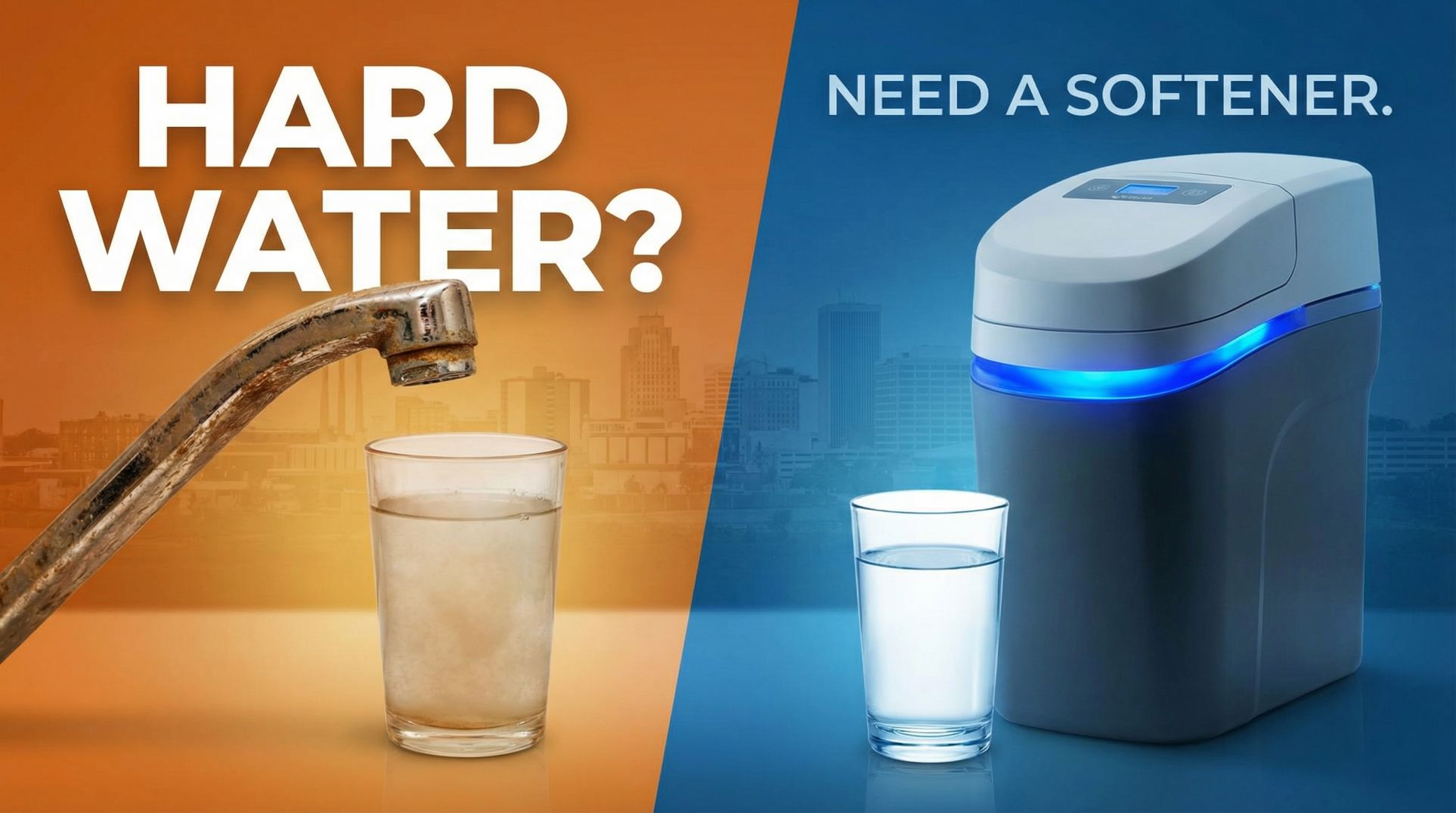
If you’ve noticed white spots on your dishes, dry skin after showering, or a chalky buildup around your faucets, you’re dealing with hard water. Peoria residents face some of the most challenging water quality issues in Arizona, with mineral content that can damage your plumbing, appliances, and even your health. Understanding the impact of hard water on your home is the first step toward protecting your investment and improving your quality of life.
Hard water contains high levels of dissolved minerals, primarily calcium and magnesium. While these minerals aren’t harmful to drink, they create significant problems throughout your home. The Greater Phoenix area, including Peoria, draws water from the Colorado River and local groundwater sources, both of which naturally contain high mineral concentrations that make our water some of the hardest in the nation.
Understanding Peoria’s Water Quality
Peoria’s water supply consistently measures between 12 and 18 grains per gallon of hardness, placing it in the “very hard” to “extremely hard” category. To put this in perspective, water is considered hard at just 7 grains per gallon. The Arizona Department of Water Resources reports that most Valley cities experience similar hardness levels, but Peoria’s combination of groundwater and surface water sources creates particularly challenging conditions for homeowners.
The mineral content in your water doesn’t just affect one part of your home—it impacts every system that uses water. From your water heater to your coffee maker, hard water leaves deposits that reduce efficiency and shorten the lifespan of everything it touches. Many Peoria residents don’t realize the extent of damage until they face expensive repairs or replacements.
Signs Your Home Has Hard Water Problems
Recognizing hard water symptoms early can save you thousands of dollars in repairs and replacements. Your dishes might emerge from the dishwasher with cloudy spots or a white film that won’t wipe away. This happens because the minerals in hard water don’t rinse clean, leaving behind calcium and magnesium deposits on every surface.
Your skin and hair often provide the first clues about water quality issues. Hard water prevents soap from lathering properly and leaves a residue on your skin that can feel sticky or dry. Many people notice their hair becomes dull, brittle, or difficult to manage. These issues stem from the mineral buildup that coats your hair and skin, blocking moisture and creating an uncomfortable film.
- Soap scum accumulates quickly on shower doors and bathtub surfaces
- Clothes feel stiff and colors fade faster than they should
- Appliances make unusual noises or fail prematurely
- Water pressure decreases over time as pipes become clogged
- Monthly energy bills increase as appliances work harder
The Hidden Costs of Hard Water
Your water heater bears the brunt of hard water damage. Scale buildup inside the tank acts as an insulator, forcing the heating elements to work overtime. Research from the Water Quality Research Foundation shows that water heaters operating with hard water can lose up to 48% of their efficiency within just five years. This means you’re paying significantly more to heat water that takes longer to warm up.
Plumbing pipes throughout your home gradually narrow as mineral deposits accumulate on their inner walls. What starts as a thin layer eventually becomes a thick crust that restricts water flow. Older homes with galvanized pipes face even more severe problems, as the combination of hard water and aging metal creates stubborn blockages that require professional intervention.
Your appliances suffer shortened lifespans when exposed to hard water daily. Dishwashers, washing machines, and coffee makers all experience premature failure due to scale buildup on heating elements and moving parts. The average washing machine might last 11 years with soft water but only 7-8 years with hard water, according to appliance manufacturers.
How Water Softeners Solve the Problem
Water softeners use a process called ion exchange to remove calcium and magnesium from your water supply. The system contains resin beads that attract and hold hard water minerals while releasing sodium ions in their place. This exchange happens automatically as water flows through the softener, delivering mineral-free water to every fixture in your home.
The softener periodically regenerates itself by flushing the collected minerals down the drain using a salt solution. This self-cleaning process typically happens at night when water usage is low. Modern water softeners are highly efficient, using minimal water and salt while providing continuous protection for your plumbing and appliances.
Installing a water softener creates immediate and long-term benefits. You’ll notice cleaner dishes, softer laundry, and easier cleaning throughout your home. More importantly, you’re protecting expensive appliances and plumbing systems from ongoing damage. The investment in a water softener typically pays for itself within 3-5 years through reduced energy costs and extended appliance lifespans.
Choosing the Right Water Softener for Your Home
Selecting the appropriate water softener depends on your household size, water usage, and the hardness level of your water. A family of four typically needs a softener with a capacity of 32,000 to 48,000 grains. Larger households or homes with extremely hard water should consider higher-capacity systems to ensure adequate treatment.
Salt-based softeners remain the most effective and economical choice for most homes. These systems completely remove hardness minerals and require only periodic salt additions to maintain performance. Salt-free conditioners, while marketed as alternatives, don’t actually remove minerals—they attempt to prevent scale formation with varying degrees of success.
Smart water softeners offer advanced features like demand-initiated regeneration, which monitors actual water usage rather than operating on a fixed schedule. These systems conserve salt and water by regenerating only when necessary. Wi-Fi connectivity allows you to monitor system performance and receive maintenance alerts through your smartphone.
Professional Installation Makes the Difference
Installing a water softener involves more than connecting a few pipes. The system must be properly sized for your home, positioned correctly in relation to your water heater and other fixtures, and programmed to match your specific water conditions. Professional installation ensures your softener operates at peak efficiency from day one.
A qualified plumber will test your water hardness, calculate your household’s water usage, and recommend the ideal system configuration. They’ll also check your home’s plumbing to identify the best installation location and ensure proper drainage for the regeneration cycle. Many DIY installations fail because homeowners overlook critical factors like water pressure requirements or electrical connections.
For reliable water softener installation and service in Peoria, Emergency Master Plumbing & Air provides expert solutions tailored to your home’s specific needs. Their experienced technicians understand local water conditions and can recommend the most effective system for your situation. Call 623-584-4706 to schedule a water quality assessment and discover how much you could save by addressing hard water problems now.
Maintaining Your Water Softener System
Regular maintenance keeps your water softener running efficiently for decades. Check the salt level monthly and refill the brine tank when it drops below one-quarter full. Use high-quality salt designed specifically for water softeners—cheaper alternatives often contain impurities that can damage the system.
Clean the brine tank annually by removing any salt bridges or sediment buildup. A salt bridge occurs when a hard crust forms above the water line, preventing salt from dissolving properly. Breaking up these formations ensures your softener continues regenerating effectively.
Professional servicing every 2-3 years helps catch potential problems before they cause system failures. A trained technician will inspect the resin tank, check valve operation, and verify that regeneration cycles occur as programmed. They can also adjust settings if your water hardness changes or your household size increases.
The Environmental and Health Perspective
Some residents worry about the sodium content in softened water. The amount added during ion exchange is minimal—typically less than 12.5 milligrams per 8-ounce glass for water with 10 grains of hardness. This is considerably less than the sodium found in a slice of bread. People on strict low-sodium diets can install a separate drinking water tap that bypasses the softener.
Modern water softeners are far more efficient than older models, using less salt and water during regeneration. The environmental impact of softened water is offset by the energy savings from efficient appliances and the reduced need for harsh cleaning chemicals. Soft water requires less soap and detergent, meaning fewer chemicals enter the environment through your drains.
Water conservation becomes easier with a softener because you need less water to rinse soap and shampoo completely. Your water heater operates more efficiently, reducing energy consumption and the associated environmental impact. These cumulative benefits make water softeners a environmentally responsible choice for Arizona homes.
Taking Action Against Hard Water
Waiting to address hard water problems only increases the eventual cost. Every month without a water softener allows more scale to accumulate in your pipes and appliances. The longer you delay, the more damage occurs—and damage that’s already happened won’t reverse itself just because you install a softener.
Consider the total cost of hard water over just five years: higher utility bills, frequent appliance repairs, excessive cleaning product purchases, and reduced efficiency throughout your home. When you compare these ongoing expenses to the one-time investment in a quality water softener, the decision becomes clear. Protection costs less than repair.
Don’t let hard water continue damaging your home’s plumbing and appliances. Contact Emergency Master Plumbing & Air at 623-584-4706 for a comprehensive water quality assessment and professional softener installation. Their team serves Peoria and surrounding areas with reliable solutions that protect your investment and improve your daily life.