How to Identify and Remove Tree Roots from Your Scottsdale Sewer Line

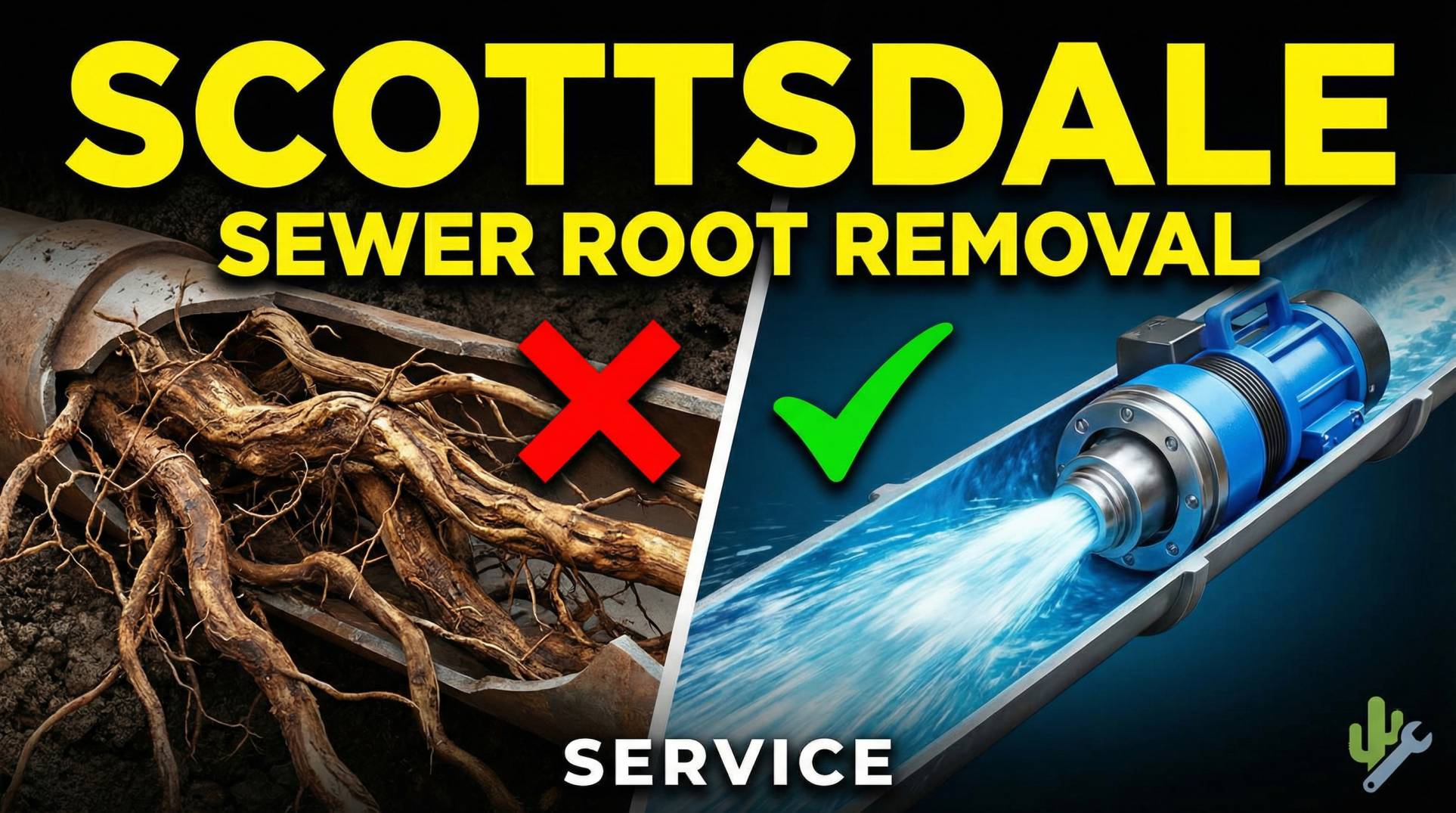
Your home’s mature trees provide beautiful shade during Arizona’s scorching summers, but beneath the surface, their roots may be wreaking havoc on your plumbing system. Tree root intrusion ranks among the most common and destructive sewer line problems facing Scottsdale homeowners, causing thousands of dollars in damage when left unaddressed.
Understanding how roots invade your pipes, recognizing the warning signs, and knowing your removal options can save you from costly emergency repairs and protect your property’s foundation.
Why Tree Roots Target Your Sewer Lines
Tree roots don’t randomly attack your plumbing—they’re actively seeking the resources they need to survive . Arizona’s dry climate makes the constant moisture inside sewer pipes especially attractive to tree roots searching for water and nutrients. Even the smallest crack or loose pipe joint releases water vapor that acts like a beacon, drawing roots directly toward your sewer line.
Once roots discover these tiny openings, they work their way inside and begin expanding. What starts as hair-thin roots quickly transforms into thick, tangled masses that fill the entire pipe diameter. Older clay and concrete pipes are particularly vulnerable because their joints naturally separate over time, creating perfect entry points. The roots don’t just block flow—they continue growing and expanding, which cracks the pipes further and accelerates the damage.
Common tree species in Scottsdale landscapes, including mesquite, palo verde, and willow, are notorious for aggressive root systems that can extend 20 to 30 feet from the trunk. If your sewer line runs anywhere near these trees, root intrusion is a matter of when, not if.
Seven Warning Signs You Have Root Problems
Homeowners often miss the early indicators of root intrusion because symptoms develop gradually . Recognizing these warning signs early can prevent complete sewer line failure and significantly reduce repair costs.
Slow-draining fixtures represent one of the earliest red flags . When your shower, sink, or bathtub takes noticeably longer to drain than usual, roots may be partially blocking your main sewer line. Many homeowners mistakenly assume they have a simple clog and waste time with drain cleaners that can’t address root intrusions.
Gurgling sounds coming from toilets or drains indicate air bubbles trapped behind a blockage . When roots obstruct your sewer line, water struggles to flow properly, forcing air back up through your fixtures. These sounds typically worsen when you run water elsewhere in the house.
Recurring toilet backups that happen despite regular cleaning suggest roots are trapping paper and waste in your main line . If you find yourself plunging toilets multiple times per week, the problem extends beyond the fixture itself.
Unexplained spikes in your water bill can signal root-damaged pipes leaking underground . When roots crack your sewer line, water escapes continuously into the surrounding soil. You’re literally paying for water that never reaches your home or properly exits through the system.
Foul odors emanating from drains indicate waste accumulating behind a root blockage . As organic material gets trapped and begins decomposing, it produces increasingly unpleasant smells that permeate your home.
Sinkholes or unusually lush patches in your yard reveal where damaged pipes are leaking . The escaping wastewater saturates the soil, creating soft spots or depressions. Paradoxically, you might also notice certain areas of grass growing much greener and faster than surrounding lawn—they’re being fertilized by sewage leaking from root-damaged pipes.
Foundation cracks represent the most serious consequence of root intrusion . When major leaks go unaddressed, water accumulates around your foundation, compromising its structural integrity and potentially affecting your entire home.
Professional Root Removal Methods
Once roots establish themselves inside your sewer line, removal requires specialized equipment and expertise. Professional plumbers employ several proven techniques depending on the severity of intrusion and your pipe material.
Mechanical root cutting uses rotating blades mounted on flexible cables to slice through root masses. The cutter head feeds through your sewer cleanout access point and travels through the pipe, chopping roots into small pieces that flush away. This method works well for moderate blockages and provides immediate relief. However, mechanical cutting only removes roots currently inside the pipe—it doesn’t address the entry points or prevent regrowth.
Hydro jetting represents the most thorough cleaning method available. This technique uses pressurized water streams exceeding 4,000 PSI to blast away roots and scour pipe walls completely clean. Unlike mechanical cutting, hydro jetting removes all debris, grease buildup, and root fragments while also cleaning the pipe surface. The high-pressure water reaches into cracks and crevices that blades might miss. Plumbers typically recommend hydro jetting for severe blockages or as preventive maintenance for homes with recurring root problems.
Chemical root treatments provide a supplementary approach for ongoing maintenance. Specialized foaming formulations containing herbicides like dichlobenil expand throughout the pipe, coating roots and killing them on contact . Products like copper sulfate crystals can eliminate small root intrusions in metal or concrete pipes, though they shouldn’t be used with septic systems. Rock salt offers a septic-safe alternative that works similarly . These treatments work best after mechanical removal to prevent immediate regrowth.
Camera inspection should accompany any root removal service . Professional plumbers insert waterproof cameras into your sewer line to identify exactly where roots are entering, assess pipe damage, and verify complete removal. This diagnostic step ensures technicians address the actual problem areas rather than guessing.
Long-Term Solutions and Prevention
Removing roots solves the immediate crisis, but lasting protection requires addressing how roots gained access in the first place.
Pipe lining creates a new pipe within your existing damaged line. Technicians insert a resin-coated liner through your cleanout, inflate it against the old pipe walls, and cure it in place. The result is a seamless, jointless barrier that roots cannot penetrate. This trenchless repair method protects your landscaping since it requires minimal excavation.
Pipe replacement with modern PVC materials offers superior root resistance. PVC pipes feature smooth interiors and tightly sealed joints that leave virtually no entry points for roots. While more invasive than lining, complete replacement makes sense when pipes have suffered extensive damage or you’re already excavating for other repairs.
Root barriers physically block roots from reaching your sewer line. These vertical shields made from plastic, fabric, or metal redirect root growth downward and away from pipes. Installation requires digging alongside your sewer line to place barriers between trees and pipes, but properly installed barriers provide decades of protection.
Strategic tree placement prevents problems before they start . When landscaping, maintain at least 10 feet of clearance between large trees and sewer lines. Research the mature root spread of any species you’re considering planting and position them accordingly.
Annual inspections catch root intrusions while they’re still minor. Scheduling yearly camera inspections allows plumbers to spot hair-thin roots before they develop into major blockages. Early detection means simpler, less expensive treatments.
Regular maintenance cleaning discourages root establishment. Homes with older clay or concrete pipes benefit from annual hydro jetting that clears debris and small roots before they gain a foothold.
When to Call Professional Help
Some homeowners attempt DIY root removal using rented equipment, but sewer line work carries significant risks. Improper tool use can damage pipes, creating more problems than you started with. Chemical treatments require careful handling to avoid harming your plumbing system or contaminating soil.
Complete sewage backups demand immediate professional response. Multiple fixtures backing up simultaneously indicates a severe main line blockage that only commercial-grade equipment can address safely.
Recurring problems despite attempted repairs suggest roots have caused structural damage requiring professional assessment. If you’re treating the same blockage every few months, inspection and permanent solutions are needed.
Older homes with original clay or cast iron pipes should always involve professional evaluation. These materials become brittle over time, and aggressive root removal attempts can cause catastrophic pipe failure.
Professional plumbers bring specialized equipment, diagnostic tools, and expertise that prevent costly mistakes. They can accurately assess damage severity, recommend appropriate solutions, and guarantee their work—protections you don’t have with DIY approaches.
Protect Your Scottsdale Home from Root Damage
Tree root intrusion transforms from a minor nuisance into a plumbing emergency faster than most homeowners realize. The investment in professional root removal and preventive measures costs far less than repairing foundation damage or replacing an entire sewer line after catastrophic failure.
If you’ve noticed any warning signs or want to protect your Scottsdale property with preventive maintenance, Emergency Master Plumbing & Air provides comprehensive sewer root removal services throughout the greater Phoenix area. Their experienced technicians use state-of-the-art camera inspection, hydro jetting, and permanent repair solutions to eliminate root problems and prevent future intrusions. Don’t wait until you’re facing a sewage backup emergency—call 623-584-4706 today to schedule an inspection and keep your sewer lines flowing freely for years to come.