Burst Pipe Emergency in Prescott AZ – Step-by-Step Homeowner Guide

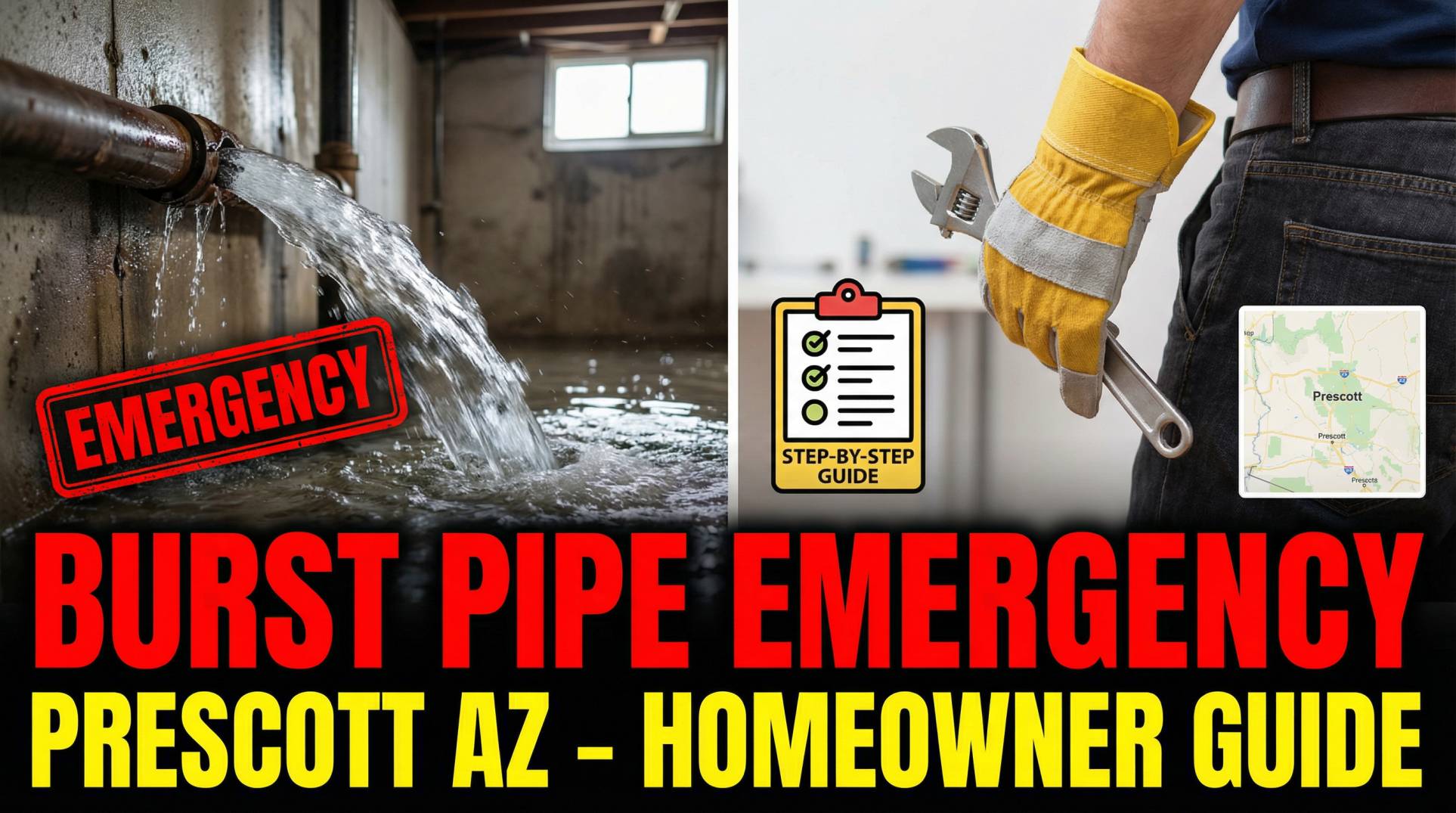
A burst pipe is every homeowner’s nightmare, and in Prescott, Arizona’s high-elevation climate, it’s a very real threat during winter months. When water freezes inside your plumbing, it expands with tremendous force, often cracking or bursting pipes without warning. The resulting damage can flood your home within minutes, destroying flooring, walls, furniture, and personal belongings. Knowing exactly what to do in those critical first moments can mean the difference between minor repairs and catastrophic damage costing thousands of dollars.
Prescott sits at approximately 5,400 feet above sea level, where temperatures regularly drop into the 20s and 30s during winter nights. The freezing season typically runs from October 21 through May 1, with extreme lows occasionally reaching dangerous levels. This unique climate creates perfect conditions for frozen and burst pipes, especially in homes with older plumbing or inadequate insulation.
Immediate Actions: The First 5 Minutes Matter Most
Step 1: Shut Off Your Main Water Supply
The moment you discover a burst pipe, your absolute priority is stopping the flow of water into your home. Every second counts. Locate your main water shut-off valve—typically found in your basement, crawl space, utility room, or near your water heater. Turn the valve clockwise until it stops completely. This single action will prevent thousands of gallons from flooding your property.
If you’re unsure where your shut-off valve is located, take time right now to find it. Walk through your home, identify its exact location, and make sure every adult family member knows where it is and how to operate it. In an emergency, this knowledge becomes invaluable.
Step 2: Turn Off Electricity in Affected Areas
Water and electricity create a deadly combination. If water has reached electrical outlets, light switches, appliances, or your electrical panel, immediately turn off power to those circuits at your main breaker box. Never step into standing water if electrical sources are nearby. If you cannot safely access your circuit breaker, evacuate the area and wait for professional help.
Step 3: Drain Remaining Water From Your System
After shutting off the main water supply, open all faucets throughout your home—both hot and cold. Flush toilets to empty the tanks. This drains remaining water from your pipes and relieves pressure in the system, which helps prevent additional pipes from bursting. Leave faucets open until water stops flowing completely.
If weather conditions are below freezing, this step also helps prevent any remaining water from freezing and causing more damage overnight.
Step 4: Document Everything for Insurance
Before touching anything or starting cleanup, grab your phone and thoroughly document the damage. Take photos and videos of the burst pipe location, all water damage to floors and walls, damaged furniture and belongings, and the overall extent of flooding. These images provide crucial evidence for your insurance claim and can significantly speed up the reimbursement process.
Write down the time you discovered the burst, weather conditions, and your immediate observations. This documentation protects your financial interests and establishes a clear timeline of events.
Step 5: Locate the Burst Pipe
If you can safely access the area, try to identify exactly where the pipe has burst. Note its location—whether it’s in a wall, under a sink, in the basement, or in your crawl space. If visible, you may even be able to temporarily reduce water flow by wrapping the break with rubber, waterproof tape, or pipe clamps until professional help arrives. However, never attempt repairs that could expose you to electrical hazards or structural risks.
Knowing the exact location helps your plumber arrive prepared with the right tools and replacement materials, reducing repair time and costs.
Water Damage Control and Cleanup
Remove Standing Water Immediately
Time is your enemy when dealing with water damage. The longer water sits, the more damage it causes to your home’s structure and the higher your risk of mold growth. Use whatever tools you have available: wet/dry vacuums, pumps, buckets, towels, and mops. Focus first on removing large volumes of standing water, then address smaller puddles and damp areas.
For significant flooding involving several inches of water, consider renting professional-grade water extraction equipment. Many hardware stores offer these rentals at reasonable rates.
Dry Out Affected Areas Thoroughly
Once standing water is removed, aggressive drying becomes essential. Open all windows and doors to promote air circulation (weather permitting). Set up fans pointing toward wet areas and run dehumidifiers continuously. The goal is to completely dry all affected materials within 24-48 hours to prevent mold and mildew growth.
Pay special attention to carpets, padding, drywall, insulation, and wooden furniture. These materials absorb water quickly and can harbor mold if not properly dried.
Remove Damaged Materials
Some materials simply cannot be saved after water exposure. Saturated drywall, insulation, carpeting, and padding typically need complete removal to prevent long-term mold issues and structural problems. While this seems drastic, it’s far better to remove damaged materials now than to face health hazards and more expensive repairs later.
Bag and dispose of unsalvageable items promptly. Keep a detailed list for your insurance claim.
Clean and Disinfect All Surfaces
Water damage cleanup extends beyond just drying. Once areas are dry, thoroughly clean and disinfect all affected surfaces using appropriate cleaning products. This kills bacteria and mold spores that may have started growing, ensuring your home remains safe and healthy.
Understanding Why Pipes Burst in Prescott
Prescott’s climate presents unique challenges for homeowners. The combination of high elevation, significant temperature swings, and extended freezing periods creates conditions where pipes are particularly vulnerable. Temperatures frequently drop below freezing from late October through early May, with winter nights often dipping into the 20s and 30s.
The most common cause of burst pipes is freezing. When water inside pipes freezes, it expands by approximately 9 percent, exerting tremendous pressure on pipe walls. This pressure eventually exceeds the pipe’s strength, causing cracks or complete ruptures. Pipes in exterior walls, unheated garages, crawl spaces, and outdoor hose bibs face the highest risk.
Additionally, Prescott experiences large diurnal temperature variations—often nearly 30 degrees between day and night temperatures. These freeze-thaw cycles repeatedly stress plumbing systems, weakening pipes over time and making them more susceptible to failure.
Prevention: Protecting Your Prescott Home
Insulate Vulnerable Pipes
Prevention is always cheaper than repair. The most effective protection against burst pipes is proper insulation. Focus on pipes located in exterior walls, garages, crawl spaces, attics, and anywhere exposed to cold air. Foam pipe insulation is inexpensive, easy to install, and dramatically reduces freezing risk.
For pipes that freeze repeatedly, consider installing heat tape—an electric heating element that actively warms pipes during cold weather. Follow manufacturer installation instructions carefully to ensure safe operation.
Seal Air Leaks
Cold air infiltrating through gaps and cracks accelerates pipe freezing. Inspect areas around pipes where they enter your home, gaps in exterior walls, and spaces around vents and utilities. Seal these openings with caulk, expanding foam, or weatherstripping. This simple step keeps cold air out and warm air around your plumbing.
Protect Outdoor Faucets
Outdoor hose bibs and faucets face direct exposure to Prescott’s freezing temperatures. Before winter arrives, disconnect all garden hoses, drain standing water from spigots, and install insulated hose bib covers. These protective covers cost just a few dollars but can prevent hundreds of dollars in damage.
Keep Water Moving During Freezing Weather
When temperatures plunge into the low 20s or below, allow faucets to drip slowly overnight. Moving water is much harder to freeze than standing water. Even a small, steady drip can prevent ice formation and keep pipes safe during the coldest nights. Focus on faucets served by pipes in exterior walls or unheated areas.
Maintain Consistent Indoor Temperatures
Never let your home’s temperature drop below 55 degrees Fahrenheit, even when you’re away. Keep cabinet doors under sinks open during extreme cold to allow warm air circulation around pipes. If you’re leaving town during winter, either maintain heat at a safe level or have someone check your property daily.
When to Call Professional Help
While some homeowners attempt temporary fixes, burst pipe repair requires professional expertise. Licensed plumbers have the tools, experience, and knowledge to properly repair or replace damaged pipes, ensure connections are watertight, and verify your entire system is functioning safely.
Professional repair costs typically range from $500 to $1,500 for straightforward fixes, though extensive damage or hard-to-reach locations can increase costs. Emergency services during nights, weekends, or holidays may carry additional charges, but the protection they provide for your home’s value far outweighs the expense.
Your homeowner’s insurance typically covers burst pipe repairs and resulting water damage, though policies vary. Contact your insurance company promptly to start your claim and understand your coverage details.
Get Expert Help Fast in Prescott
When disaster strikes, you need a plumbing team that responds immediately, works efficiently, and delivers lasting repairs. Emergency Master Plumbing & Air serves Prescott homeowners with 24/7 emergency plumbing services, including burst pipe repair, water damage prevention, and comprehensive pipe insulation.
Our experienced technicians understand Prescott’s unique climate challenges and know exactly how to protect your home from freeze damage. We arrive quickly, assess the situation thoroughly, and provide expert repairs that keep your family safe and your home protected.
Don’t wait until disaster strikes. Call Emergency Master Plumbing & Air at 623-584-4706 for immediate emergency service or to schedule a preventive inspection before the next cold snap. Protect your investment and gain peace of mind knowing your plumbing is in expert hands.