Hard Water Damage in Scottsdale Plumbing Systems

Living in Scottsdale means enjoying sunny skies and stunning desert landscapes, but it also comes with a hidden challenge: hard water. If you’ve noticed spots on your dishes, dry skin after showers, or unexplained plumbing problems, hard water could be the culprit. This guide breaks down everything you need to know about hard water damage in Scottsdale plumbing systems, from spotting early signs to implementing effective solutions that protect your home and save you money long-term.
What Is Hard Water and Why Does Scottsdale Have So Much of It?
Hard water occurs when groundwater picks up high levels of minerals like calcium and magnesium as it flows through rocky soil and limestone deposits. In Scottsdale, our water supply draws from the Salt River Project and Colorado River sources, which naturally carry these minerals due to the region’s geology.
The U.S. Geological Survey classifies water hardness by mineral content: soft water has less than 60 mg/L, moderately hard ranges from 61-120 mg/L, and very hard exceeds 180 mg/L. Scottsdale’s water often tests in the “hard” to “very hard” range, sometimes reaching 200-300 mg/L, according to local utility reports. This isn’t unique to our area—much of Arizona and the Southwest faces similar issues—but it hits Scottsdale homes hard because of our reliance on these mineral-rich sources.
Key Impacts of Hard Water:
-
Scale buildup: Minerals precipitate out and form crusty deposits inside pipes and appliances.
-
Reduced efficiency: Your water heater, dishwasher, and washing machine work harder, spiking energy bills.
-
Shorter lifespan: Plumbing components wear out 2-3 times faster in hard water conditions.
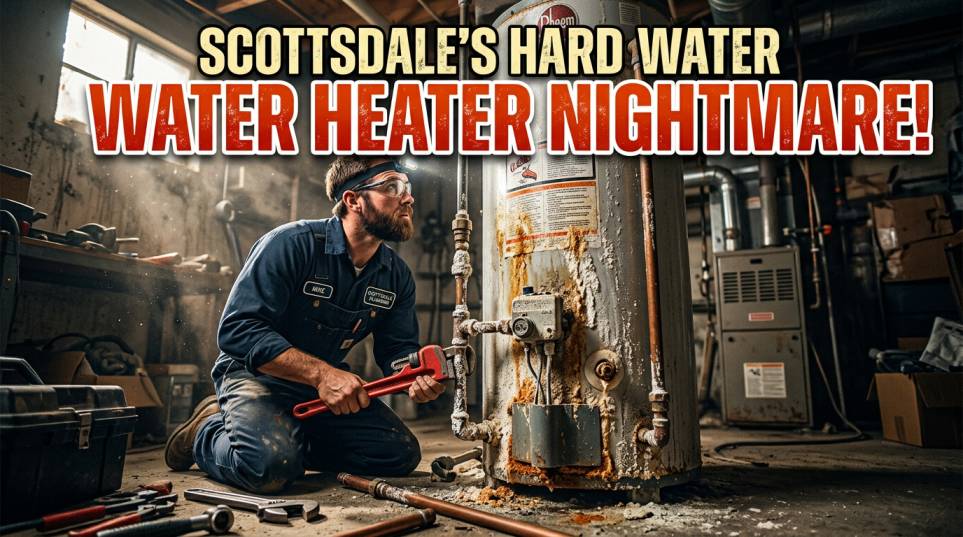
Homeowners often overlook these effects until a major repair bill arrives. For instance, a standard water heater in soft water lasts 10-15 years, but in Scottsdale’s hard water, it might fail in just 5-7 years due to sediment clogging the tank.
Common Signs of Hard Water Damage in Your Scottsdale Home
Ignoring hard water leads to escalating problems. Early detection prevents costly damage. Here are the top indicators:
-
White, chalky residue: Check faucets, showerheads, and fixtures for crusty buildup. Rub it—if it’s hard and doesn’t wipe away easily, it’s scale.
-
Spots on glassware and fixtures: Even after drying, dishes and sinks show filmy white spots.
-
Poor water pressure: Scale narrows pipes over time, reducing flow. A shower that used to roar now trickles.
-
Appliance breakdowns: Frequent repairs on water heaters, dishwashers, or coffee makers signal mineral accumulation.
-
Soap scum and dry skin/hair: Hard water reacts with soap to create sticky scum, making lathering difficult and leaving residue on skin.
-
Higher utility bills: Scaled heat exchangers in water heaters force them to use 20-30% more energy, per Department of Energy estimates.
In one local case, a Scottsdale homeowner ignored scale on their showerhead for years. When it finally clogged completely, plumbers found main pipes narrowed by 40%, leading to a $4,000 repiping job. Spotting these signs early—like testing your water hardness with affordable strips from hardware stores—can save thousands.
How Hard Water Specifically Damages Scottsdale Plumbing Systems
Scottsdale’s intense heat amplifies hard water woes. Summer temperatures push 110°F, causing pipes to expand and contract, which cracks scale deposits and sends debris downstream. Combined with our chlorinated municipal water, this accelerates corrosion.
Pipe Damage Breakdown
| Component | Hard Water Effect | Lifespan Reduction |
|---|---|---|
| Copper Pipes | Internal scaling restricts flow; pinhole leaks form | 30-50% shorter |
| Water Heaters | Sediment insulates tank, overheating elements | 50-70% shorter |
| Faucets & Fixtures | Clogged aerators; mineral etching on finishes | Frequent replacements |
| Irrigation Lines | Scale blocks emitters, stressing desert landscaping | Seasonal failures |
Over time, scale acts like sandpaper inside pipes, wearing away protective linings. A study by the Water Quality Association found that untreated hard water doubles plumbing repair frequency in high-hardness areas like ours.
Pumps and fixtures suffer too. Scottsdale’s low humidity means indoor air pulls moisture from pipes, exacerbating mineral crystallization. If you have galvanized steel pipes (common in older homes), expect rapid rust under scale layers.
Step-by-Step Solutions to Combat Hard Water Damage
Don’t wait for a plumbing emergency. These proven strategies restore efficiency and extend your system’s life.
1. Test Your Water First
Grab a home test kit (under $20 at stores like Home Depot) or request a free analysis from your plumber. Aim for under 120 mg/L for optimal home use.
2. Install a Water Softener
The gold standard fix. Ion-exchange softeners swap calcium/magnesium for sodium, removing 95-99% of hardness. Template-assisted crystallization (TAC) systems are salt-free alternatives ideal for Scottsdale’s eco-conscious homes—they prevent scale without adding sodium.
Installation Tips:
-
Place near your main water line entry.
-
Choose models with demand-initiated regeneration to save water (up to 50% less than timed units).
-
Expect $800-$2,500 upfront, with payback in 3-5 years via energy savings.
3. Routine Maintenance Habits
-
Flush your water heater: Drain 2-4 gallons annually to remove sediment. Turn off power, attach a hose to the drain valve, and flush until clear.
-
Clean fixtures: Soak showerheads and aerators in white vinegar overnight. The acidity dissolves scale safely.
-
Use scale inhibitors: Add phosphate-based filters to pipes for low-cost protection.
4. Upgrade to Hard-Water-Resistant Appliances
Opt for Energy Star-rated models with stainless steel tanks or descaling features. For irrigation, install low-flow drip systems less prone to clogs.
Real results? A Fountain Hills family installed a whole-home softener and saw water pressure double, energy bills drop 25%, and no more skin irritation—after just one month.
Long-Term Prevention for Scottsdale Homes
Prevention beats cure. Integrate these into your routine:
-
Annual inspections: Have a licensed plumber check pipes for early scale via camera scoping.
-
Eco-friendly options: Salt-free conditioners suit well water users or those on low-sodium diets.
-
Lifestyle tweaks: Use liquid fabric softeners (they rinse better) and vinegar rinses for laundry/dishes.
For larger properties, consider point-of-use softeners (under sinks) to target high-impact areas without whole-home costs.
Why Professional Help Matters for Hard Water Issues
DIY fixes work for minor spots, but severe damage demands experts. Licensed plumbers use tools like hydro-jetting to blast scale without pipe damage and can assess if repiping is needed (e.g., switching to PEX for superior mineral resistance).
In Scottsdale’s unique climate, pros also spot related issues like corrosion from pool chemicals mixing with hard water. Delaying invites bursts—especially risky during monsoons when pipes stress.
For reliable solutions to hard water damage in Scottsdale plumbing systems, trust the local experts at Emergency Master Plumbing & Air. With years of experience tackling Arizona’s toughest water challenges, our team provides fast diagnostics, installations, and 24/7 emergency service. Call us today at 623-584-4706 for a free water quality assessment and customized fix to keep your home running smoothly.