
Garbage Disposal Repair Guide – Scottsdale

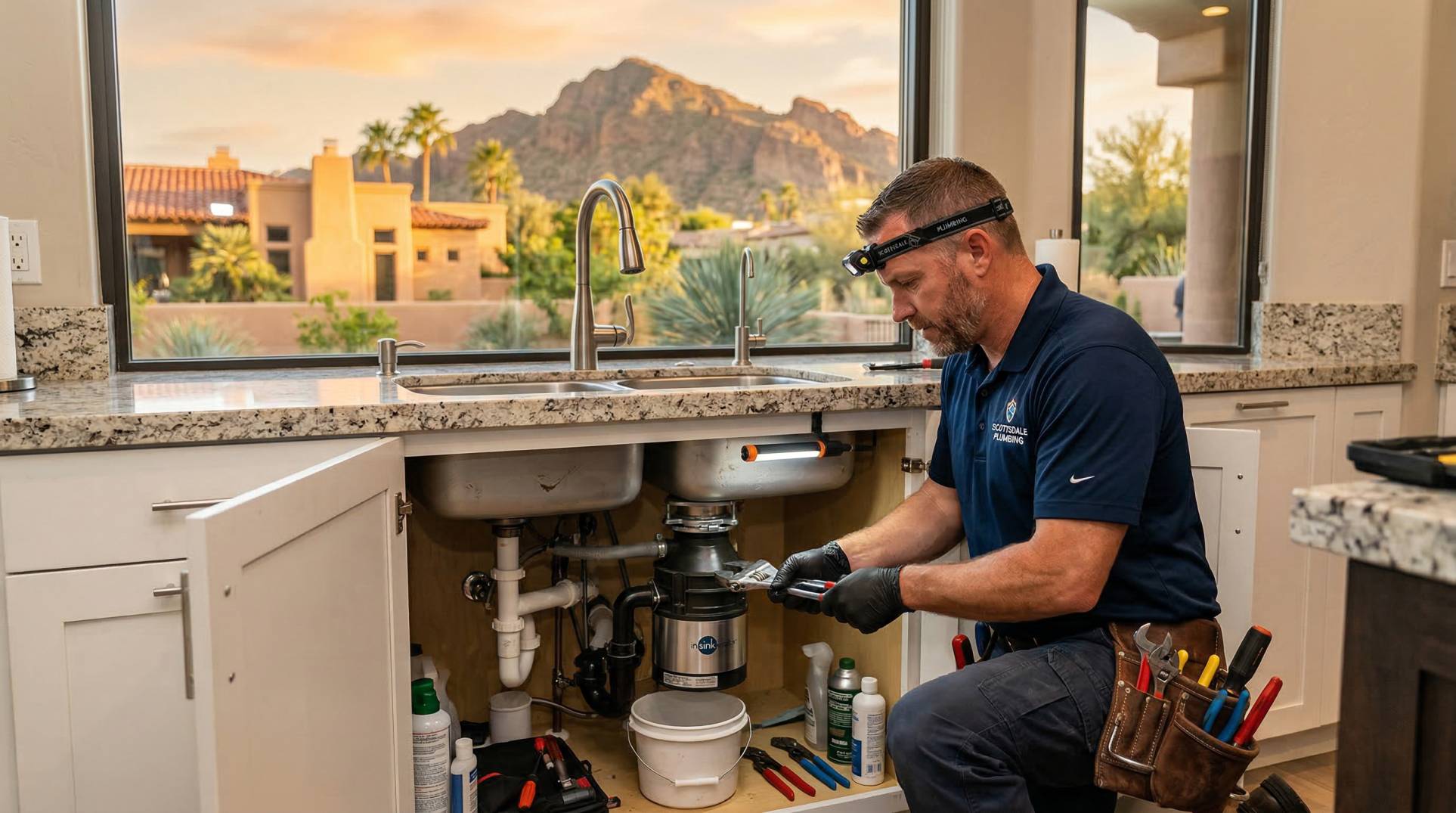
Garbage disposals make kitchen cleanup easier by grinding food scraps into small particles that flow down the drain. When they malfunction, simple troubleshooting often resolves the issue before needing professional help.
Common Garbage Disposal Problems
Homeowners in Scottsdale frequently face humming noises, clogs, or units that won’t turn on. These issues stem from everyday use, like sending fibrous foods or grease through the system.
A jammed disposal often occurs when bones, fruit pits, or utensils block the blades, causing the motor to overheat and shut off automatically.
Leaks around the unit or under the sink signal worn seals or loose connections, which can lead to water damage if ignored.
Safety Precautions Before Repairs
Always prioritize safety to avoid injury. Turn off the power at the circuit breaker or wall switch before touching the disposal.
Never insert your hand into the unit, even if unplugged—use tools like pliers or a wooden spoon handle instead.
Wear gloves and have a flashlight ready to inspect without risking cuts from sharp edges.
Step-by-Step Unclogging Guide
Start by resetting the unit. Locate the red reset button on the bottom or side of the disposal and press it firmly after waiting 15-20 minutes for the motor to cool.
If it hums but doesn’t spin, insert an Allen wrench (usually 1/4-inch) into the hex hole at the bottom center and turn it back and forth to free the impeller.
Run cold water while testing: pour a steady stream, turn on the power, and flip the switch briefly. Add ice cubes and citrus peels monthly to sharpen blades and prevent buildup.
Reset Button Not Working?
Overloads trip the reset due to prolonged jamming. Unplug the unit, then use tongs to remove visible debris from the top opening.
Shine a light inside—if you see an obstruction like a spoon handle, gently maneuver it out without forcing the blades.
Restore power and test. Persistent failure points to a faulty motor, requiring replacement rather than repair.
Fixing Leaks Effectively
Leaky disposals drip from the sink flange, dishwasher connection, or hose. Tighten the mounting ring under the sink with a wrench for flange leaks, but avoid over-tightening to prevent cracking.
For hose issues, disconnect the drain pipe, clean the threads, and reconnect with plumber’s tape for a secure seal.
Dishwasher leaks need a knockout plug removal check—ensure it’s punched out or the connection won’t drain properly.
When It’s a Jam, Not a Clog
Jams halt the flywheel rotation. With power off, use a broom handle to gently nudge the blades clockwise from inside the chamber.
Avoid chemical cleaners—they damage motors and pipes. Instead, flush with hot vinegar and baking soda for buildup after clearing.
Test under running water; if it grinds slowly, the unit may need sharpening or professional blade service.
Maintenance to Prevent Future Issues
Run cold water for 15-30 seconds before, during, and after use to solidify fats for easier grinding.
Avoid sending stringy veggies (celery, potato peels), eggshells, or rice down—compost them instead to reduce strain.
Clean monthly: grind citrus rinds and ice, then pour boiling water mixed with dish soap to flush residue.
Signs Replacement Beats Repair
Units over 10 years old or those humming without spinning often need replacing—motors rarely recover fully.
Frequent jams or weak grinding indicate worn impellers. Continuous power or leak issues amplify energy costs and risks.
New models grind quieter, use less power, and handle tougher scraps—check for batch-feed vs. continuous-feed based on family size.
Scottsdale-Specific Considerations
Scottsdale’s hard water contributes to mineral buildup inside disposals, accelerating clogs. Use white vinegar soaks quarterly to dissolve scale.
Local codes require proper venting—inspect during repairs to comply and avoid fines.
Summer monsoons increase humidity, promoting mold in sink cabinets; dry thoroughly after fixes.
Tools You’ll Need for Home Repairs
Keep these in your toolbox: Allen wrench set, pliers, flashlight, channel-lock wrench, plumber’s putty, and pipe tape.
A drain snake (25-foot) clears sink traps effectively without disassembly.
Baking soda, vinegar, and lemon halves serve as natural cleaners—no harsh chemicals needed.
What Not to Put Down Your Disposal
Fibrous items like corn husks or artichokes wrap around blades. Expandable foods (pasta, rice) absorb water and swell.
Grease hardens in pipes, oils coat impellers—wipe pans instead.
Non-foods like sponges, labels, or glass shatter and jam internals permanently.
Testing After Every Repair
Run cold water full blast for one minute post-fix. Activate the disposal in short bursts, listening for smooth whirring.
Check for leaks by filling the sink halfway and draining slowly—watch all connections.
Grind a test mix: ice, salt, and peels. Uneven sounds mean incomplete clearing.
Long-Term Disposal Lifespan Tips
Choose 1/2 to 1 HP models for households; higher for heavy use. Stainless steel builds last longer than plastic.
Annual professional inspections catch wear early, especially in Scottsdale’s mineral-rich water.
Sound insulation reduces noise—opt for anti-vibration mounts on install.
Garbage disposals simplify life but demand respect. Following these steps resolves 80% of issues at home. For persistent problems or full replacements, contact experienced local pros.
For reliable service in Scottsdale, reach out to Emergency Master Plumbing & Air at 623-584-4706. Their team handles garbage disposal repairs swiftly, ensuring your kitchen runs smoothly.