Heater Not Turning On in Phoenix – Common HVAC Failures

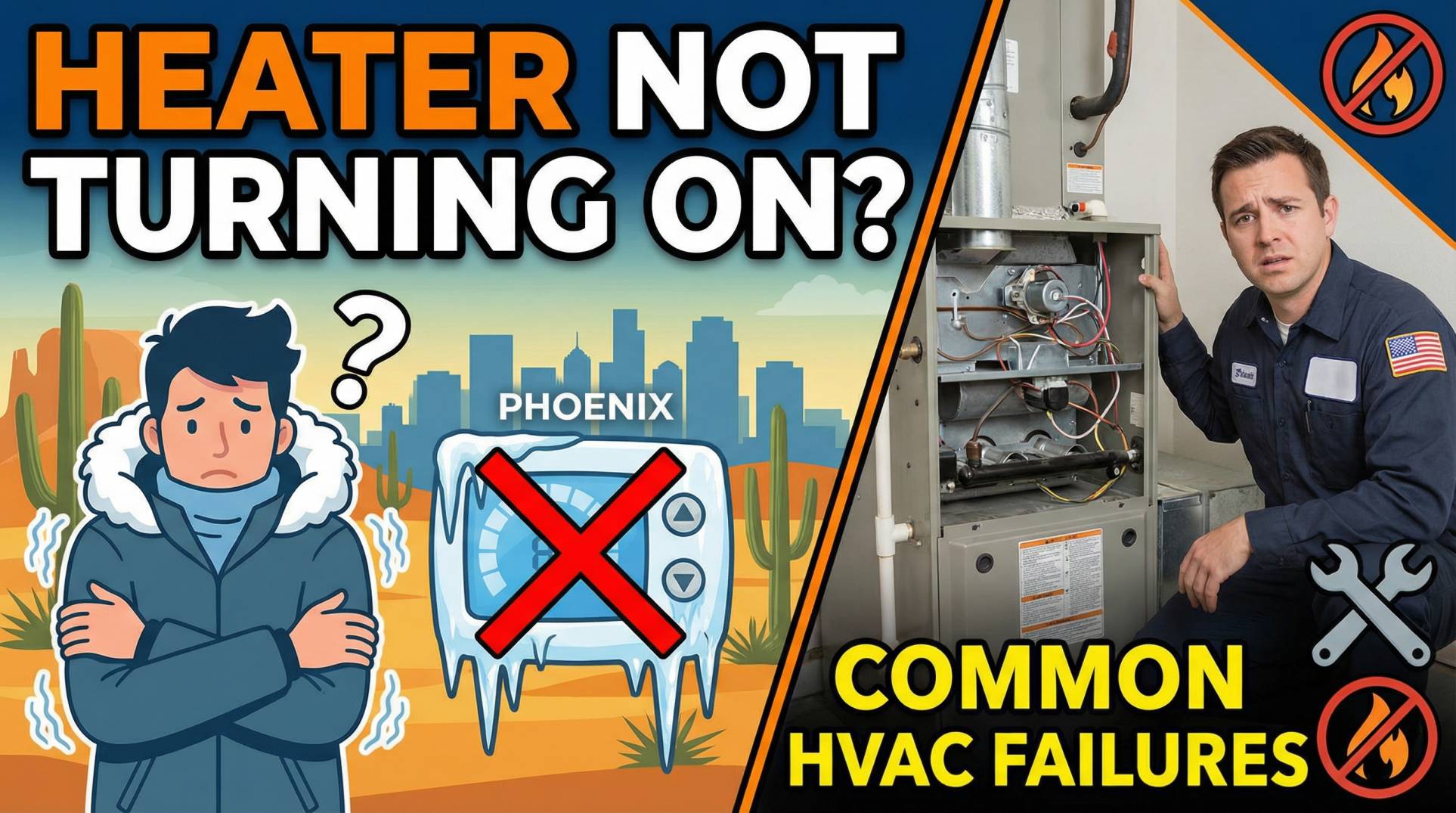
When temperatures drop in the Phoenix area, the last thing you want is a heater that refuses to turn on. While our winters are milder than many parts of the country, those chilly desert nights can be surprisingly uncomfortable without a functioning heating system. Understanding why your heater isn’t working can help you decide whether it’s a simple fix or time to call a professional.
Check Your Thermostat First
Before assuming your heating system has failed, start with the simplest explanation—your thermostat. This small device controls your entire heating system, and many “heater failures” are actually thermostat issues.
Make sure your thermostat is set to “heat” mode rather than “cool” or “off.” This might seem obvious, but it’s one of the most common oversights, especially during seasonal transitions when Phoenix temperatures can fluctuate dramatically between day and night.
Check if your thermostat displays anything at all. A blank screen usually indicates dead batteries or a power issue. Replace the batteries if your model uses them, typically requiring AA or AAA batteries. For hardwired thermostats, check your home’s circuit breaker to ensure the HVAC circuit hasn’t tripped.
Set your thermostat at least five degrees higher than the current room temperature. If nothing happens after a few minutes, you’ve ruled out a simple setting issue and can move on to other potential causes.
Power Supply Problems
Your heating system requires electricity to operate, even if you have a gas furnace. The blower motor, control board, and ignition system all depend on electrical power.
Locate your main electrical panel and look for a tripped breaker. HVAC systems typically have their own dedicated circuit. A tripped breaker will be in the middle position between “on” and “off.” Flip it completely off, then back on. If it trips again immediately, you have an electrical problem that requires professional attention.
Most furnaces also have a safety switch near the unit itself—usually a light switch on or near the furnace. Someone might have accidentally turned it off during cleaning or maintenance. Make sure this switch is in the “on” position.
Check the emergency shutoff switch as well. This red switch is often located at the top of basement stairs or near the furnace entrance. It’s designed to cut power quickly in an emergency, but can be bumped accidentally.
Dirty or Clogged Air Filters
Phoenix’s dusty environment means air filters accumulate debris faster than in many other regions. A severely clogged filter restricts airflow, which can cause your system to overheat and shut down as a safety measure.
Remove your air filter and hold it up to a light source. If you can’t see light passing through, it’s too dirty and needs replacement. Even if some light passes through, visible dust buildup means it’s time for a change.
Standard filters should be replaced every 30 to 90 days, depending on factors like whether you have pets, how often you run your system, and local dust conditions. During Arizona’s particularly dusty seasons, monthly replacement isn’t excessive.
After replacing the filter, wait about 30 minutes before attempting to restart your system. The limit switch that triggered the safety shutdown needs time to reset once proper airflow is restored.
Pilot Light and Ignition Issues
Gas furnaces rely on either a standing pilot light or an electronic ignition system to create heat. When these components fail, your furnace won’t produce warm air.
For older furnaces with standing pilot lights, look through the viewing window (usually behind a small panel on the furnace). The pilot should have a small, steady blue flame. If it’s out, consult your furnace’s instruction manual for relighting procedures. Always follow manufacturer guidelines carefully, as improper relighting can be dangerous.
Modern furnaces use electronic ignition systems instead of pilot lights. These systems have either a hot surface igniter or an intermittent pilot. If you hear clicking sounds but no flame ignites, the igniter may be cracked or worn out. Hot surface igniters are fragile ceramic components that can crack over time and require professional replacement.
Some furnaces have a viewing window where you can observe the ignition sequence. If you see sparking but no flame, you might have a gas supply issue or a faulty flame sensor. These problems require professional diagnosis and repair.
Flame Sensor Problems
The flame sensor is a safety device that confirms your furnace has successfully ignited. When this component becomes coated with residue, it can’t properly detect the flame, causing your system to start and then shut down after just a few seconds.
This issue manifests as a furnace that attempts to start, runs briefly, then turns off. You might experience this frustrating cycle repeatedly. The flame sensor is typically a thin metallic rod positioned near the burner assembly.
While some homeowners feel comfortable cleaning flame sensors with fine steel wool or emery cloth, this task requires accessing internal furnace components. If you’re not confident working inside your furnace, this is best left to professionals who understand the safety protocols.
Limit Switch Activation
Your furnace’s limit switch prevents overheating by shutting down the burners when temperatures get too high. When this safety feature activates, your blower might continue running while the burners turn off.
Common causes of limit switch activation include restricted airflow from dirty filters, blocked vents, or closed registers throughout your home. Phoenix homes sometimes have registers closed in unused rooms to “save energy,” but closing too many can create pressure imbalances that trigger the limit switch.
Ensure all supply registers are at least partially open, even in unused rooms. Check return air vents for obstructions like furniture or curtains. Proper airflow throughout your home is essential for safe furnace operation.
Blower Motor Malfunctions
The blower motor circulates warm air throughout your home. When it fails, your furnace might heat air but can’t distribute it. You might hear the furnace running but feel no air coming from vents.
Blower motor issues often develop gradually. Warning signs include squealing noises, reduced airflow, or the motor frequently cycling on and off. Bearings can wear out, capacitors can fail, or the motor itself can burn out.
If your blower motor is struggling, you might notice a burning smell—a sign of electrical overheating. Turn off your system immediately if you smell burning, as this can indicate serious electrical problems or fire hazards.
Ductwork and Airflow Issues
Even a perfectly functioning furnace can seem “broken” if conditioned air isn’t reaching your living spaces. Ductwork problems are surprisingly common in Phoenix homes, especially older properties.
Check visible ductwork in attics, crawl spaces, or basements for disconnections, large gaps, or damage. Desert rodents can damage ducts, and temperature fluctuations can cause joints to separate. Significant duct leaks waste energy and reduce heating effectiveness.
Inspect all room vents to ensure they’re open and unobstructed. Furniture placement, curtains, or storage items can block vents without you realizing it. Each blocked vent reduces overall system efficiency and can trigger safety shutoffs.
Gas Supply Concerns
Gas furnaces require an uninterrupted natural gas or propane supply. If other gas appliances in your home (water heater, stove) are also not working, you may have a gas supply issue.
Check whether your gas valve is fully open. The valve handle should be parallel to the gas pipe. If it’s perpendicular, the valve is closed. Gas valves are typically located near the furnace.
After extended periods of non-use, air can enter gas lines. When you first try to heat your home in fall, it may take longer than usual for your furnace to ignite as air purges from the system. However, if your furnace repeatedly tries to ignite without success, shut it down and call for professional help.
Never attempt to diagnose gas leaks yourself. If you smell gas (which has an added sulfur odor similar to rotten eggs), leave your home immediately and call your gas company’s emergency line.
When to Call the Professionals
While some heating issues have simple solutions, many require professional expertise. Attempting complex repairs without proper training and tools can be dangerous and may void your warranty.
Call a professional HVAC technician if you experience repeated system failures, smell gas or burning odors, hear unusual noises, notice water pooling around your furnace, or if your system is older than 15 years and showing multiple problems.
Regular maintenance prevents many emergency failures. Annual inspections catch small issues before they become major problems, extend equipment lifespan, and keep your system running efficiently during Phoenix’s heating season.
Expert Help When You Need It
Don’t let a heating failure leave you uncomfortable during cold Phoenix nights. Emergency Master Plumbing & Air provides expert diagnosis and repair for all heating system issues. Our experienced technicians understand Arizona’s unique climate challenges and can quickly identify why your heater isn’t turning on.
We offer prompt service throughout the Phoenix area with transparent pricing and quality workmanship you can trust. Whether you need emergency repairs, routine maintenance, or a complete system evaluation, our team is ready to help.
Contact Emergency Master Plumbing & Air at 623-584-4706 for reliable heating system repairs and service. We’ll get your home comfortable again with professional solutions that last.