Peoria Pipe Burst Emergency: What to Do Before Help Arrives

A burst pipe is one of the most stressful plumbing emergencies a homeowner can face. Water gushing from your walls, ceiling, or floors can cause thousands of dollars in damage within minutes, destroying belongings, weakening your home’s structure, and creating conditions for dangerous mold growth. In Peoria, Arizona, where temperature fluctuations and aging plumbing systems are common, knowing exactly what to do in those critical first moments can make the difference between a manageable repair and a devastating loss.
This comprehensive guide walks you through every step you need to take when a pipe bursts in your home, helping you minimize damage and protect your property until professional help arrives.
Understanding Why Pipes Burst in Peoria
While many people associate burst pipes exclusively with freezing temperatures, Peoria homeowners face several risk factors throughout the year. Temperature swings between cold desert nights and warm days can stress plumbing systems, causing expansion and contraction that weakens pipe walls over time. Arizona’s hard water contributes to sediment buildup inside pipes, creating blockages and pressure points that eventually give way.
Older homes in Peoria often have galvanized steel or polybutylene pipes that deteriorate with age, becoming increasingly vulnerable to ruptures. High water pressure, tree root intrusion, and corrosion also play significant roles in pipe failures. Recognizing these vulnerabilities helps you understand why immediate action is so critical when a burst occurs.
Step 1: Shut Off Your Main Water Supply Immediately
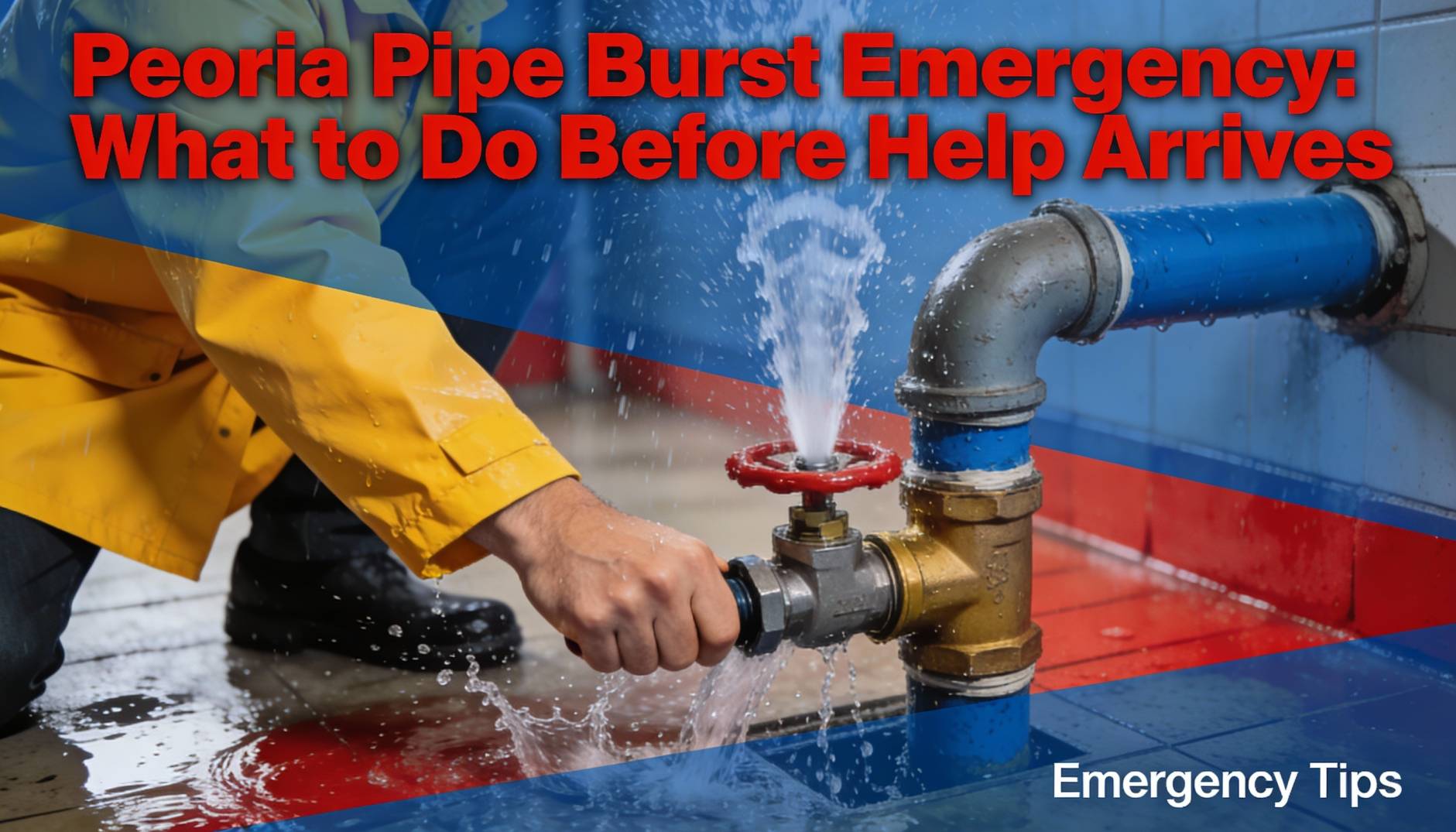
The single most important action you can take during a pipe burst emergency is to stop the flow of water into your home. Every second counts when water is flooding your property, so you need to know the location of your main water shut-off valve before an emergency strikes.
In most Peoria homes, the main water valve is located near the water meter, often in the garage, basement, or on an exterior wall. The valve typically requires turning clockwise to close. Once you’ve shut off the main water supply, the flooding will stop, though residual water in the pipes may continue draining for a few moments.
If you cannot locate the main shut-off valve, look for individual fixture shut-off valves near the affected area as a temporary measure. However, shutting off the main supply is always preferable as it ensures no additional water enters your plumbing system.
Step 2: Turn Off Electricity in Affected Areas
Water and electricity create a lethal combination. Before you begin any cleanup efforts, assess whether water has reached or is near any electrical outlets, appliances, light fixtures, or exposed wiring. If water has come into contact with electrical components, or if you’re uncertain, shut off power to the affected area immediately.
Go to your electrical panel and flip the breaker switches for the rooms where water is present. If the burst pipe has caused extensive flooding throughout your home, consider shutting off the main electrical supply until a professional can assess the safety of your electrical system. Never step into standing water if electrical appliances or outlets are present, as the risk of electrocution is severe.
Step 3: Drain Remaining Water From Your Plumbing System
After shutting off the main water supply, open all faucets throughout your home to drain any remaining water in the pipes. This step serves multiple purposes: it reduces pressure in your plumbing system, prevents additional water from escaping through the burst pipe, and helps you identify if there are multiple leaks in your system.
Start with the faucets on the highest floor of your home and work your way down. Don’t forget outdoor spigots if temperatures allow. Also flush toilets to empty the tanks. This process typically takes just a few minutes but significantly reduces the potential for additional water damage.
Step 4: Contain and Remove Standing Water
Time is your enemy when dealing with standing water in your home. Water begins damaging flooring, drywall, and furniture immediately upon contact, and mold can begin growing within 24 to 48 hours. Start containing and removing water as quickly as possible using whatever tools you have available.
Place buckets, containers, or large pots under active drips to catch water. Use towels, mops, and rags to soak up standing water from floors and surfaces. If you have a wet/dry vacuum, this is the time to use it—these tools are highly effective at removing large amounts of water quickly. Move furniture, electronics, and other valuables away from wet areas to prevent damage.
For significant flooding, you may need to squeegee or sweep water toward floor drains or outside doors. Work systematically, starting with the areas with the deepest water and moving outward. The faster you remove standing water, the less damage your home will sustain.
Step 5: Apply Temporary Repairs to the Burst Pipe
While waiting for professional help, you can apply temporary measures to slow or stop the leak. These fixes are not permanent solutions but can significantly reduce water damage in the crucial time before a plumber arrives.
If you can access the burst pipe, wrap thick towels or rubber patches directly over the break and secure them tightly with duct tape. For small holes or cracks, epoxy putty designed for plumbing repairs can provide a temporary seal. Pipe repair clamps, available at most hardware stores, offer a more robust temporary fix and can be installed quickly with basic tools.
For pinhole leaks, even a simple rubber gasket or piece of garden hose can be wrapped around the affected area and secured with hose clamps. Remember, these are stopgap measures only—professional repair is always necessary to ensure your plumbing system is safe and functional.
Step 6: Document Everything for Insurance
Before you begin extensive cleanup, take comprehensive photographs and videos of all water damage. Document the burst pipe itself, all affected rooms, damaged belongings, and standing water. This visual evidence is crucial for insurance claims and provides a clear record of the extent of the damage.
Make notes about when you discovered the burst pipe, what actions you took, and the approximate amount of water involved. Keep receipts for any emergency supplies you purchase, such as towels, buckets, or temporary repair materials. Most homeowners insurance policies cover burst pipe damage, but thorough documentation strengthens your claim significantly.
What Not to Do During a Pipe Burst Emergency
In the chaos of a burst pipe, panicked reactions can worsen the situation. Avoid these common mistakes:
-
Don’t ignore signs of a burst pipe hoping the problem will resolve itself—damage accelerates rapidly
-
Don’t attempt to repair pipes while water pressure remains in the system
-
Don’t use electrical appliances in wet areas, including hair dryers or fans near standing water
-
Don’t dispose of water-damaged items until you’ve documented them for insurance
-
Don’t delay calling a professional plumber—even if you’ve successfully stopped the immediate leak, the underlying damage needs expert assessment
Preventing Future Pipe Bursts in Your Peoria Home
Prevention is always better than emergency response. Peoria homeowners can take several proactive steps to protect their plumbing systems.
Insulate exposed pipes in garages, attics, crawl spaces, and exterior walls. Even in Arizona, winter nights can reach freezing temperatures, and insulation provides critical protection. Keep your home heated to at least 55°F during cold snaps, even if you’re away.
During particularly cold weather, open cabinet doors under sinks to allow warm air to circulate around pipes. Allow faucets to drip slowly during freezing nights—moving water is less likely to freeze. Seal drafts and air leaks around windows, doors, and foundation walls to prevent cold air from reaching your pipes.
Know the location of your main water shut-off valve and ensure all household members understand how to operate it. Consider installing smart leak detectors and automatic shut-off valves that can detect abnormal water flow and shut off your water supply before a small leak becomes a major burst.
Regular plumbing inspections can identify vulnerable pipes, excessive water pressure, and corrosion before they lead to failures. For homes with hard water, installing a water softener reduces sediment buildup that contributes to blockages and pressure problems.
When to Call Emergency Plumbing Services
While the immediate steps outlined above help you manage a burst pipe emergency, professional assistance is always necessary. Call a licensed emergency plumber immediately after securing your home, even if you’ve successfully stopped the active flooding.
Professional plumbers have the expertise and equipment to properly repair burst pipes, assess hidden damage behind walls and under floors, and identify whether additional plumbing problems exist in your system. They can also help you understand what caused the burst and recommend preventive measures specific to your home.
Water damage restoration may also be necessary depending on the extent of flooding. Professionals can properly dry your home, prevent mold growth, and repair structural damage that isn’t visible to homeowners.
Get Expert Help Fast in Peoria
When a pipe bursts in your Peoria home, every minute matters. Following these steps will help you minimize damage and protect your property, but there’s no substitute for professional emergency plumbing services.
Emergency Master Plumbing & Air provides 24/7 emergency response throughout the Peoria area, with experienced technicians who arrive quickly and fully equipped to handle any plumbing crisis. Whether you’re dealing with a burst pipe, slab leak, or any other plumbing emergency, our team has the expertise to repair the damage properly and help prevent future problems.
Don’t let a burst pipe destroy your home. Save this number now: 623-584-4706. We’re available day or night to respond to your plumbing emergencies with fast, professional service you can trust.