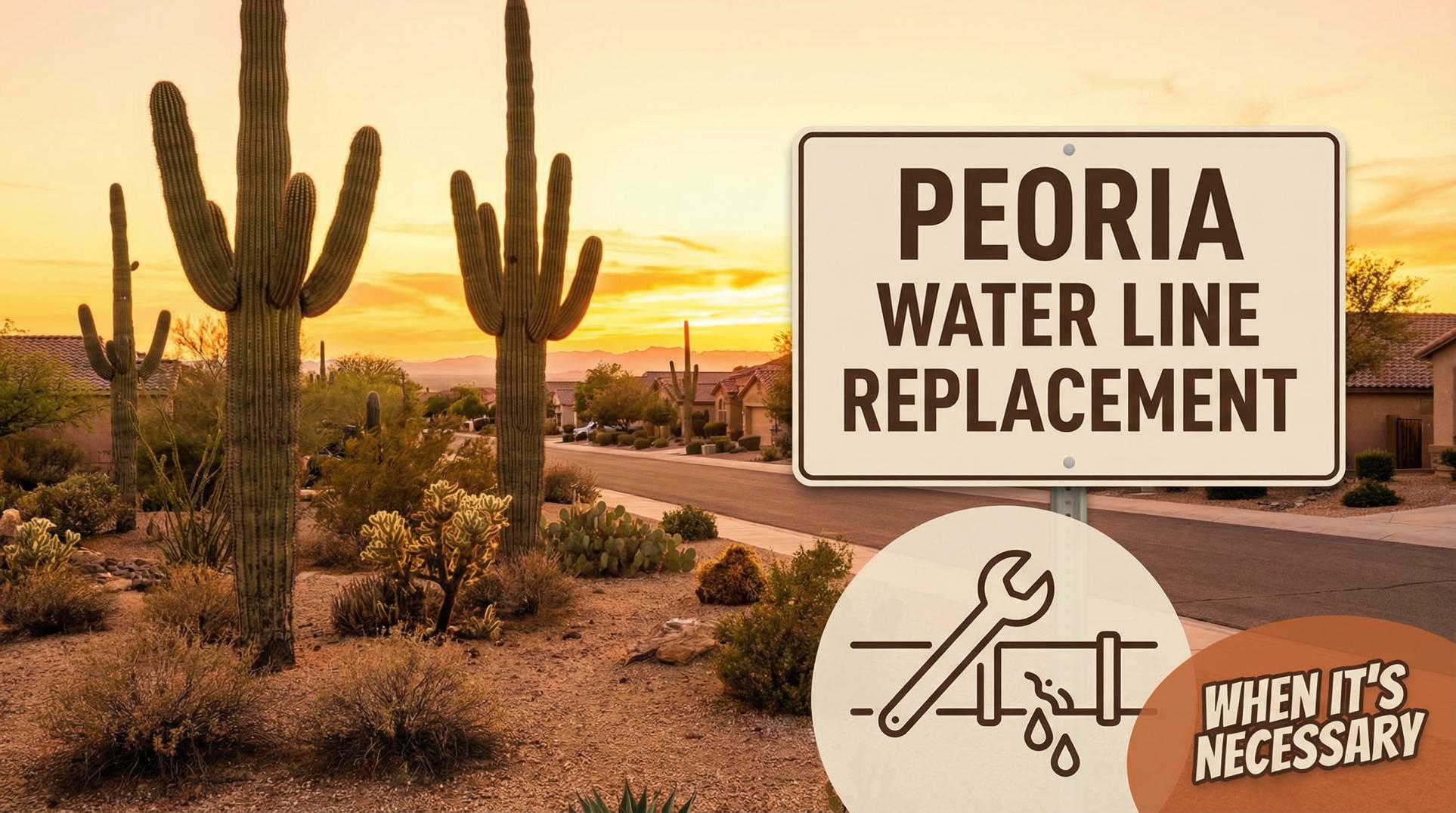
Peoria Water Line Replacement: When It’s Necessary

Your home’s water line is one of the most critical components of your plumbing system, yet it remains hidden underground and often overlooked until something goes wrong. For Peoria homeowners, understanding when water line replacement becomes necessary can save thousands of dollars in damage and prevent the stress of emergency repairs. This comprehensive guide will help you identify the warning signs, understand your options, and make informed decisions about your home’s water infrastructure.
Understanding Your Home’s Water Line System
The main water line is the pipeline that connects your home to the municipal water supply or private well. This underground pipe carries all the fresh water your household uses daily for drinking, cooking, bathing, and cleaning. In Peoria, these lines typically run from the street to your home’s foundation, ranging anywhere from 30 to 100 feet in length depending on your property.
Most water lines are made from materials like copper, galvanized steel, PVC, or polyethylene. The lifespan of these pipes varies significantly based on material quality, soil conditions, and water chemistry. While some modern pipes can last 50 years or more, older galvanized steel pipes may deteriorate in as little as 20-30 years.
Clear Warning Signs Your Water Line Needs Replacement
Persistent Low Water Pressure
One of the most noticeable signs of water line problems is a sudden or gradual decrease in water pressure throughout your home. If you’ve noticed your showers have weakened or faucets produce only a trickle, the issue might extend beyond a simple clogged aerator. When water lines develop leaks or corrosion builds up inside the pipes, the flow of water becomes restricted, resulting in noticeably lower pressure at every fixture in your house.
Discolored or Rusty Water
Clean water should be crystal clear. If you’re seeing brown, yellow, or rust-colored water coming from your taps, this indicates serious corrosion inside your water line. While discoloration that clears after running the water briefly might come from city maintenance, persistent discoloration suggests your pipes are deteriorating from the inside out. This not only affects water quality but also indicates the structural integrity of your pipes is compromised.
Unexplained Increases in Water Bills
A sudden spike in your water bill without any change in usage patterns often points to a hidden leak in your main water line. Because these pipes run underground, leaks can go undetected for weeks or even months while wasting hundreds of gallons of water. If your bill has jumped 20% or more without explanation, it’s time to investigate your water line’s condition.
Wet Spots and Soggy Areas in Your Yard
Water line leaks create obvious evidence above ground. Look for unexpectedly lush green patches of grass, soggy areas, or puddles in your yard when it hasn’t rained. These wet spots typically appear along the path where your water line runs from the street to your house. In Peoria’s dry climate, persistent moisture in your yard is especially unusual and warrants immediate attention.
Visible Cracks in Your Foundation or Driveway
Leaking water lines can wash away soil beneath concrete surfaces, causing settling, cracks, or even sinkholes. If you notice new cracks appearing in your foundation, driveway, or walkways, particularly if accompanied by other signs like low pressure or high water bills, a compromised water line could be the culprit.
Repair vs. Replacement: Making the Right Choice
Not every water line problem requires complete replacement. Understanding when repairs suffice versus when replacement becomes necessary helps you make cost-effective decisions.
When Repairs Are Sufficient
Minor leaks in isolated sections of newer pipes can often be repaired effectively. If your water line is less than 20 years old, made from durable materials like copper or PVC, and has only one problematic area, targeted repairs may solve the issue. These repairs typically cost significantly less than full replacement and can be completed quickly.
When Replacement Is Necessary
Several situations make water line replacement the smarter long-term investment:
-
Frequent repairs: If you’re calling plumbers repeatedly for water line issues, replacement prevents ongoing expenses and inconvenience
-
Aging pipes: Galvanized steel pipes older than 40 years or any water line showing extensive corrosion should be replaced
-
Multiple leak points: When leaks appear in several locations, the entire line is likely deteriorating
-
Material concerns: Homes with outdated piping materials benefit from upgrading to modern, longer-lasting options
-
Low water quality: Persistent water discoloration despite repairs indicates the pipe interior is beyond saving
The upfront cost of replacement is higher than repairs, but a new water line typically lasts 50+ years and eliminates the cycle of repeated repairs.
Water Line Replacement Methods and Costs
Traditional Trenched Replacement
The conventional method involves excavating a trench from the street to your home, removing the old pipe, and installing a new one. This approach costs between $50 and $200 per linear foot. For an average 50-foot water line, homeowners can expect to pay $2,000 to $5,000 total, including labor and materials.
While trenching is often less expensive initially, it requires significant yard disruption. You’ll need to factor in costs for restoring landscaping, repairing driveways or walkways, and replanting grass or gardens after the work is completed.
Trenchless Replacement Options
Modern trenchless technology offers two innovative approaches that minimize property disruption:
Pipe lining involves inserting an epoxy-coated liner through the existing pipe, which hardens to create a new pipe within the old one. This method costs $75 to $150 per linear foot.
Pipe bursting uses specialized equipment to break apart the old pipe while simultaneously pulling a new pipe into place. This technique costs $50 to $200 per linear foot.
Trenchless methods cost more per foot but often prove more economical overall since they eliminate restoration expenses and complete the job faster.
The Replacement Process: What to Expect
Understanding the replacement process helps you prepare for the project. Professional plumbers begin with a thorough inspection, often using camera technology to assess the pipe’s condition and identify the exact problem areas. They’ll provide a detailed estimate explaining the recommended approach and timeline.
The actual replacement typically takes one to three days depending on the method chosen and the length of pipe involved. During this time, your water service will be temporarily interrupted, though experienced professionals minimize disruption by working efficiently and scheduling strategically.
After installation, the new water line is pressure-tested to ensure proper function and leak-free operation. Your plumber should also handle necessary permits and inspections required by local Peoria building codes.
Preventing Future Water Line Problems
While water lines don’t require regular maintenance like other home systems, several preventive measures extend their lifespan:
-
Schedule periodic plumbing inspections to catch minor issues before they escalate
-
Avoid planting trees with aggressive root systems near water lines
-
Monitor your water pressure and bills for unusual changes
-
Address soil erosion or drainage issues that could stress pipes
-
Consider installing a pressure regulator if your home has consistently high water pressure
Why Professional Installation Matters
Water line replacement isn’t a DIY project. Professional plumbers bring essential expertise, specialized equipment, and licensing required for this critical work. Improperly installed water lines can lead to contamination, ongoing leaks, code violations, and expensive repairs down the road.
Experienced plumbers also understand local soil conditions, frost line depths, and municipal requirements specific to Peoria. They coordinate with the city for necessary shut-offs and inspections, ensuring your project complies with all regulations.
Get Expert Water Line Service in Peoria
If you’re experiencing any warning signs of water line problems or need a professional assessment of your home’s plumbing infrastructure, Emergency Master Plumbing & Air provides expert water line replacement services throughout Peoria and surrounding areas. Our experienced technicians use the latest diagnostic technology to accurately identify issues and recommend the most cost-effective solutions for your situation.
We understand that water line problems require prompt attention to prevent property damage and water waste. Our team is available to evaluate your water line’s condition, provide detailed estimates with no hidden fees, and complete replacement projects efficiently with minimal disruption to your daily routine.
Don’t wait until a small leak becomes a major emergency. Contact Emergency Master Plumbing & Air today at 623-584-4706 to schedule your water line inspection and protect your Peoria home from costly water damage.