Scottsdale Clogged Toilet Repair: Causes & Fast Fixes

Dealing with a clogged toilet in Scottsdale can disrupt your daily routine, especially in the desert heat where plumbing issues feel even more urgent. Whether it’s a sudden overflow during a busy morning or a slow drain that hints at trouble, understanding the root causes and quick solutions helps restore normalcy without unnecessary stress. This guide breaks down why clogs happen in local homes, spot the warning signs early, and provides step-by-step fixes to get your toilet flushing smoothly again.
Common Causes of Clogged Toilets in Scottsdale Homes
Toilet clogs often stem from everyday habits combined with regional factors like Arizona’s hard water, which leaves mineral deposits in pipes over time. One frequent culprit is excessive toilet paper; using too much at once overwhelms the drain, creating a blockage in the trap. Flushing non-flushable items, such as wipes, sanitary products, paper towels, or even children’s toys, exacerbates the problem because these materials don’t break down like human waste.
In Scottsdale, hard water minerals can build up inside pipes, restricting flow and making clogs more likely, especially in older homes with aging plumbing. Tree roots invading sewer lines are another local issue, as Arizona’s landscape encourages root growth toward water sources, leading to deeper blockages. Low water pressure from municipal supplies or a partially filled tank can also prevent proper flushing, leaving waste partially stuck. Additionally, issues like a clogged S-trap—the curved pipe behind the toilet—or problems in the broader plumbing system, such as a slow septic setup, contribute to backups.
Recognizing the Signs of a Clogged Toilet
Spotting a clog early prevents water damage and more costly repairs in your Scottsdale bathroom. Overflowing water is a clear indicator, often caused by a blockage in the toilet trap that traps waste and forces water back up. Standing water in the bowl or around the base signals restricted drainage, which could stem from deeper pipe issues or leaks.
Slow draining is another red flag; if the water takes longer than usual to recede, mineral buildup or partial obstructions might be at play. Gurgling sounds or backups in other drains, like sinks, suggest the clog extends to shared lines, possibly due to tree roots or system-wide problems common in the Valley. In severe cases, foul odors arise from trapped waste, emphasizing the need for prompt action to avoid health risks in humid post-rain conditions.
Fast DIY Fixes for Clogged Toilets
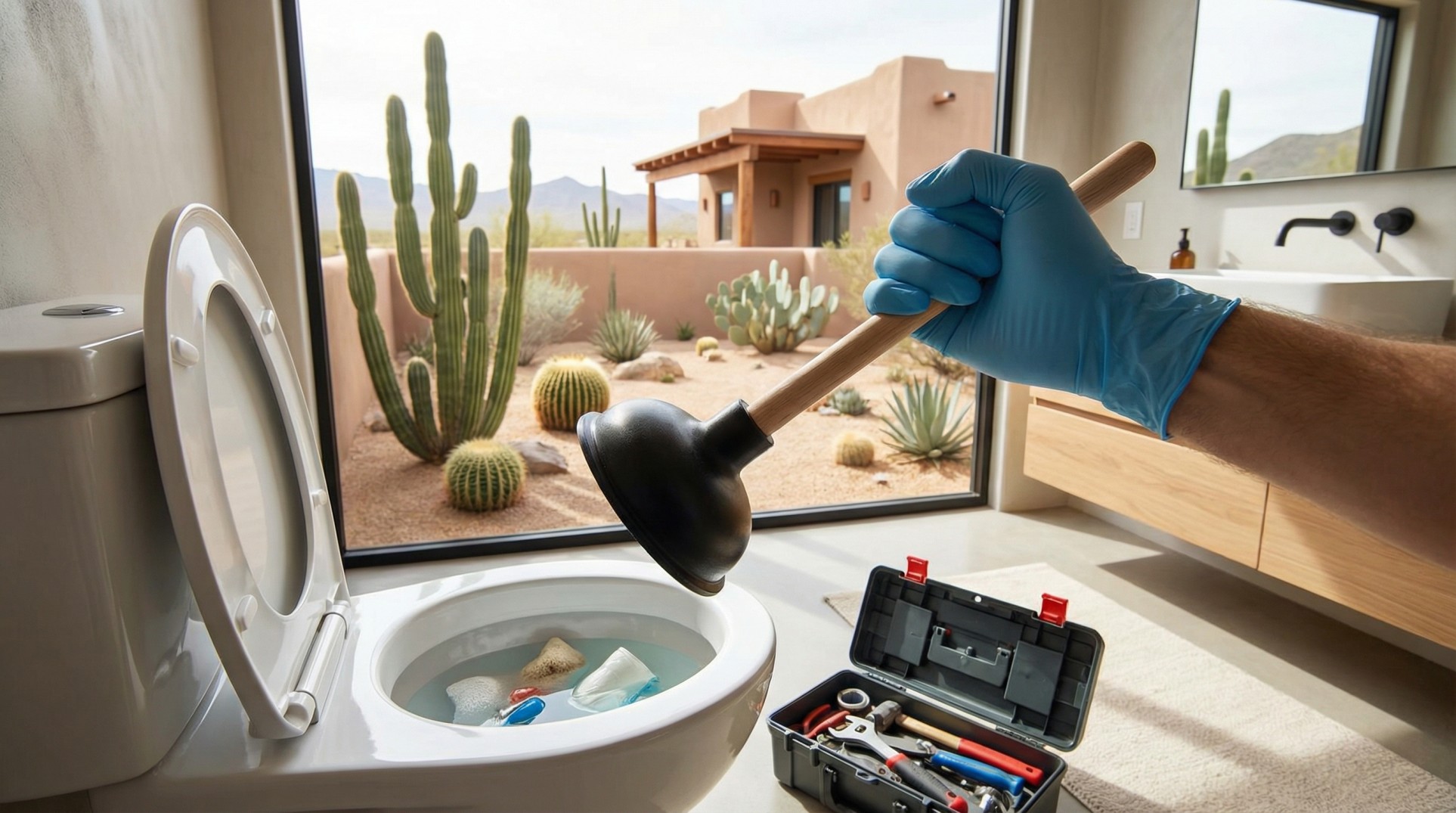
Many Scottsdale residents handle minor clogs at home with simple tools, saving time and money before considering professional help. Start with the plunger method, the most reliable first step for surface-level blockages. Choose a flange-style plunger for a tight seal over the drain hole, fill the bowl with enough water to cover the cup, and plunge firmly but steadily—push down, then pull up sharply to create pressure that dislodges the obstruction. Repeat 10-15 times, then flush to test; this works for about 80% of household clogs caused by paper or waste.
If plunging fails, try hot water and dish soap for organic matter like excess paper. Remove excess water from the bowl with a cup to avoid overflow, add half a cup of liquid dish soap to lubricate the pipes, and pour a gallon of hot (not boiling) water from waist height to build pressure. Let it sit for 10-15 minutes—the soap breaks down the clog while heat softens it—then plunge again or flush. This method is gentle on porcelain and effective for mild blockages without harsh chemicals.
For stubborn clogs, baking soda and vinegar create a fizzing reaction to dissolve buildup. Pour one cup of baking soda into the drain, followed by two cups of white vinegar, and cover with a wet cloth for 30 minutes to contain the foam. Follow with hot water to flush residue; this natural approach tackles mineral deposits from hard water prevalent in Scottsdale. If deeper intervention is needed, a toilet auger (or snake) reaches into the trapway—insert the cable, crank to break up the clog, and pull back slowly. Avoid over-tightening to prevent pipe scratches.
As a last resort for DIYers, a wet/dry vacuum can suck out solid obstructions. Empty the bowl water, seal the hose over the drain with a towel for suction, and run the vacuum on liquid setting until the clog lifts. Always wear gloves and sanitize tools afterward to maintain hygiene. These fixes typically resolve issues within 30 minutes, but test by flushing multiple times to ensure full clearance.
When to Call a Professional Plumber in Scottsdale
Not all clogs yield to home remedies, particularly in Scottsdale’s challenging plumbing environment. If DIY methods fail after two attempts, or if water backs up into showers or tubs, the blockage likely involves main lines affected by tree roots or cast-iron pipes common in older Valley neighborhoods. Recurring clogs signal underlying problems like septic slowdowns or hard water scaling that require specialized tools like hydro-jetting to blast away debris without damage.
Professional intervention is essential for safety; attempting to snake deep lines risks cracking porcelain or worsening leaks. In Arizona’s dry climate, undetected clogs can lead to mold growth from standing water, especially post-monsoon. Experts use cameras to inspect pipes, identifying issues like root intrusions invisible to homeowners. Call immediately if you notice sewage smells or multiple fixture backups, as these indicate sewer line emergencies that could contaminate your home.
Preventing Toilet Clogs in Your Scottsdale Home
Proactive steps keep plumbing reliable amid local conditions like mineral-rich water. Teach household members to flush only toilet paper and waste—avoid wipes or hygiene products labeled “flushable,” as they often tangle in pipes. Install a water softener to combat hard water buildup, reducing scale that narrows drains over time.
Schedule annual inspections for older pipes or septic systems, common in Scottsdale’s established communities, to catch tree root threats early. Use enzyme-based cleaners monthly to break down organic residue without harsh chemicals. For low-flow toilets, ensure the tank fills adequately by checking the fill valve, preventing weak flushes. These habits extend fixture life and minimize disruptions, saving on water bills in Arizona’s conservation-focused regulations.
In summary, addressing clogged toilets promptly with the right knowledge empowers Scottsdale homeowners to handle most issues effectively. From understanding hard water’s role to mastering plunger techniques, these strategies promote a hassle-free bathroom. For persistent problems or expert assurance, trust local professionals who know the Valley’s unique plumbing challenges.
If you’re facing a tough clog or need reliable service in Scottsdale, contact Emergency Master Plumbing & Air at 623-584-4706. Their team offers fast, trustworthy repairs to get your home back to normal quickly.