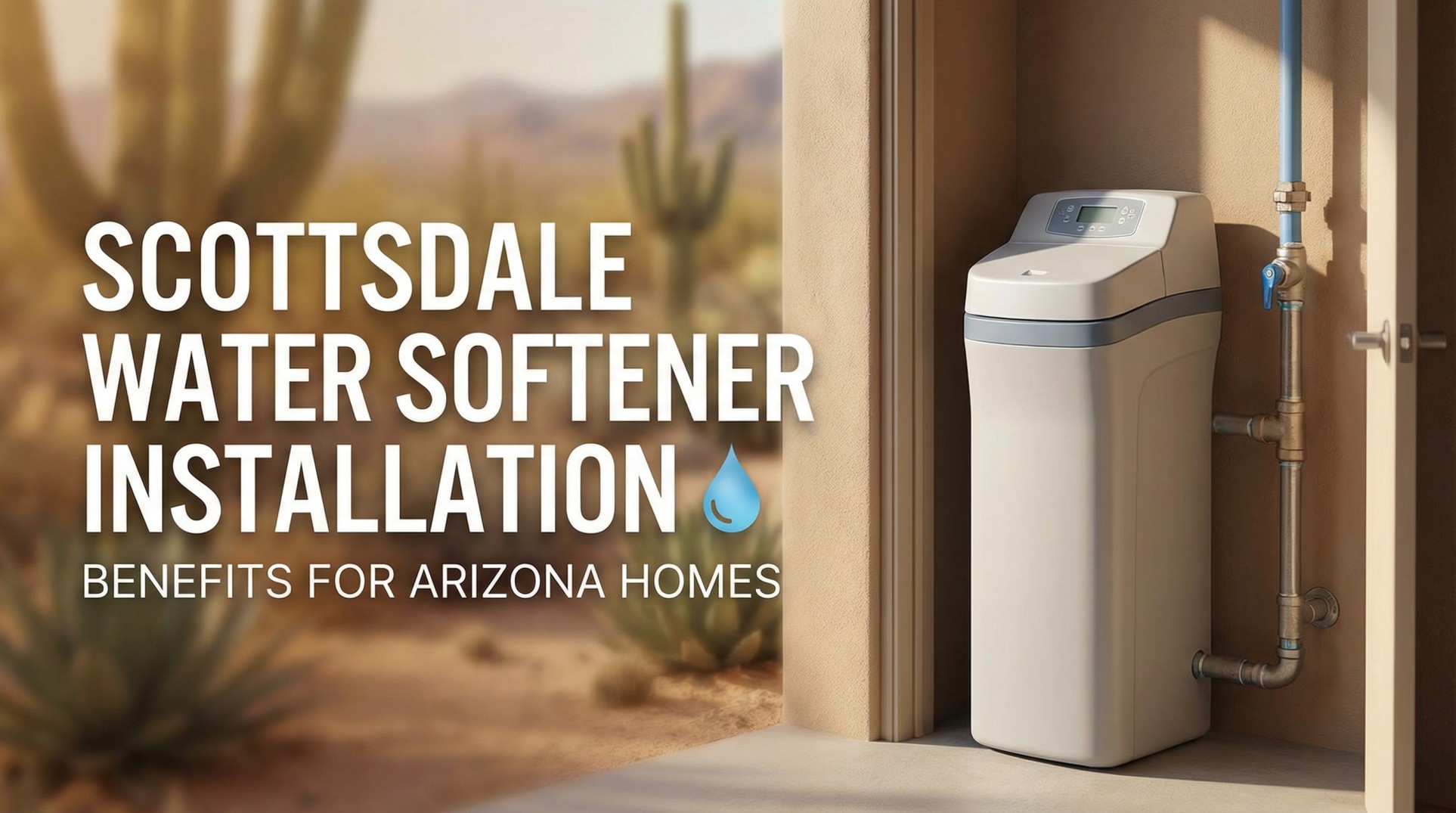
Scottsdale Water Softener Installation: Benefits for Arizona Homes

Why Arizona water is hard
Arizona’s groundwater and imported surface water carry high levels of calcium and magnesium, which leave white spots, soap film, and scale inside pipes, water heaters, and fixtures. Scottsdale homeowners see this on shower glass, around faucet aerators, and as cloudy residue on dishes. Softening replaces hardness minerals with sodium or potassium at a controlled rate, preventing scale from forming in the first place.
- Hardness shows up as limescale on fixtures, reduced water pressure over time, and gritty residue.
- Minerals precipitate faster in hot water, so water heaters, dishwashers, and coffee makers are hit hardest.
- Softeners address the cause (minerals), while cleaners only treat visible symptoms after they appear.
Everyday benefits you’ll notice fast
A properly sized and tuned softener changes daily tasks immediately and protects long‑term investments. The goal is cleaner results with less effort, lower operating costs, and fewer plumbing issues.
- Cleaner bathrooms and kitchens. Less soap scum on tile, glass, and sinks; fewer white spots and chalky rings.
- Better lather and rinsing. Soaps and detergents work the way they should, so you use less product for laundry, dishes, and showers.
- Gentler on skin and hair. Reduced mineral film means skin feels smoother and hair is easier to manage.
- Protects appliances and plumbing. Less scale on heating elements, valves, and internal passages extends the life of water heaters, dishwashers, and washing machines.
- More efficient water heating. Scale acts like insulation; preventing it helps water heat faster and can reduce energy waste.
- Lower maintenance and fewer repairs. Aerators clog less, cartridges last longer, and valves operate smoothly.
- Improved home appeal. Buyers in Scottsdale recognize water treatment as a practical upgrade that signals good care of the home.
Picking and installing the right system
Choosing the correct capacity and configuration matters more than brand hype. In Scottsdale, many homes also have a garage softener loop, which can simplify installation and keep salt handling outdoors.
- Sizing basics. Match softener capacity (measured in grains) to household hardness, water use, number of occupants, and desired regeneration frequency.
- Flow rate and pressure. Select a control valve and resin tank that can handle peak demand (showers + laundry + kitchen) without pressure drop.
- Salt‑based vs. salt‑free. Ion exchange (salt/potassium) prevents scale formation throughout the home. Salt‑free conditioners reduce adhesion but don’t truly soften; they are low maintenance options for light to moderate scale concerns.
- Pre‑filtration. A sediment or carbon pre‑filter can protect the valve and resin and help with chlorine, taste, and odor if needed.
- Placement and bypass. Install near the main line with a full‑port bypass for service and outdoor spigots if you don’t want softened water for landscaping.
- Drain and code details. Provide an air‑gapped drain connection for regeneration discharge, a dedicated GFCI outlet when required, and ensure thermal expansion control if you have a closed plumbing system.
Installation steps your pro will handle:
- Verify main line direction, loop availability, and irrigation splits; place softener after the main and before interior fixtures, leaving irrigation unsoftened.
- Level and anchor tanks; connect inlet/outlet with corrosion‑resistant fittings; set up air‑gapped drain and overflow lines.
- Program hardness, reserve capacity, regeneration time, and brine settings based on actual water tests and occupancy.
- Commissioning: sanitize tanks, flush resin fines, check for leaks, and test hardness at a downstream faucet to confirm performance.
Care, costs, and long‑term upkeep
Modern metered systems regenerate only as needed, reducing salt and water use. Basic care keeps performance consistent and protects your investment.
- Monthly: Check salt level; keep pellets 3–4 inches above the water line; break up salt bridges if present.
- Quarterly: Rinse or replace pre‑filters; vacuum sediment from brine tank if you see sludge.
- Annually: Test hardness pre‑ and post‑softener; clean the brine well; consider a resin cleaner if iron or manganese is present; verify regeneration settings if household size changed.
- Every few years: Inspect the control valve, injectors, and seals; replace worn parts before they fail; evaluate resin condition if capacity seems reduced.
- Salt choice: Use high‑purity pellets; potassium chloride is an option where sodium load is a concern, though it’s typically more expensive.
- Landscaping and drinking water: Bypass irrigation lines to avoid softened water on plants. Pair with a dedicated drinking water filter or reverse osmosis faucet if you want reduced sodium and improved taste at the sink.
Typical cost drivers:
- Equipment: Capacity, control valve features, brand, and whether you add carbon filtration or reverse osmosis.
- Installation: Presence of a softener loop, distance to drain, concrete coring, electrical outlet needs, and code‑compliant air gap.
- Maintenance: Salt/potassium refills, pre‑filters, periodic service, and any resin cleaning products for challenging water conditions.
FAQs homeowners ask
- Will a softener remove chlorine? No. Add a carbon filter before the softener for chlorine taste and odor reduction.
- Is soft water safe to drink? Yes for most people; the added sodium is small. Use potassium chloride or a drinking water filter if you prefer to minimize sodium.
- Does it help with white spots on dishes? Yes. Fewer minerals mean fewer spots. Use less detergent and confirm your dishwasher’s rinse‑aid setting after installation.
- Can it fix low water pressure? It won’t fix existing scale bottlenecks, but it helps prevent new buildup. Severe restrictions may require descaling or pipe/fixture replacement first.
- Do I need soft water for outdoor spigots? Usually no. Keep hose bibs on bypass for plants and washing vehicles where you don’t mind rinsing minerals away naturally.
- What about tankless water heaters? They benefit significantly because they’re sensitive to scale; softening helps maintain efficiency and reduce error codes.
When to call a pro
Call for professional help if you see rapid salt use, constant regeneration, salty‑tasting water, resin beads in fixtures, or hardness sneaking back despite normal settings. A licensed installer can test water properly, right‑size the system, and set the controller so you get reliable, efficient performance year‑round. Local expertise also helps with proper loop use, drain placement, and neat, serviceable plumbing that looks as good as it runs.
Recommended installer in Scottsdale
For fast, clean installation and ongoing service in Scottsdale and the West Valley, contact Emergency Master Plumbing & Air at 623-584-4706. From water testing to equipment selection, setup, and maintenance, the team handles everything so you get spot‑free dishes, efficient hot water, and longer‑lasting fixtures without the hassle.