
How Arizona Heat Damages Plumbing Pipes

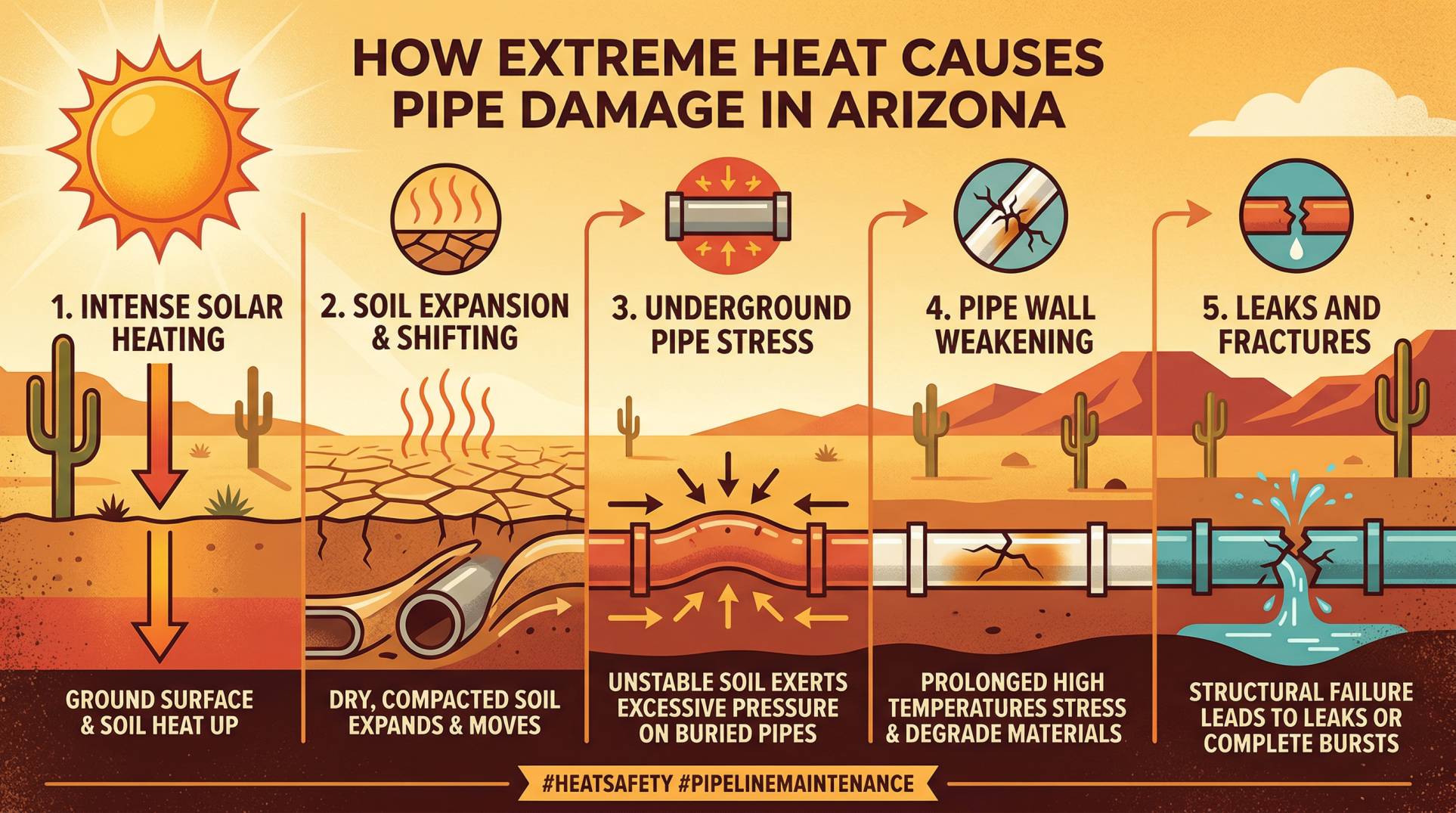
Arizona’s intense summer heat creates unique challenges for homeowners, pushing plumbing systems beyond their limits and leading to unexpected repairs. Understanding these effects helps protect your home from costly water damage.
Why Heat Targets Your Pipes
High temperatures in Arizona cause pipes to expand and contract repeatedly. Materials like PVC and copper, common in many homes, react to heat above 100°F by stretching, which stresses joints and seals over time.
This daily cycle weakens connections, turning minor wear into cracks or leaks. Underground pipes face added pressure from sun-baked soil that shifts and dries out, pulling away from foundations.
Water inside pipes heats up quickly in exposed areas, reaching 120°F or more. This thermal expansion increases internal pressure, straining the entire system and accelerating damage in older installations.
Expansion and Contraction Breakdown
Pipes expand when hot and shrink at night, creating micro-fractures. Outdoor lines and those in attics suffer most, as they lack insulation from the home’s cooler interior.
Copper pipes, popular in Arizona for their durability, still expand by about 0.01 inches per 10 feet for every 100°F rise. PVC expands even more, up to twice that rate, making joints prone to failure.
Over months, this movement loosens fittings. Homeowners often spot the first signs as dripping faucets or spongy hoses, but ignored issues lead to major breaks.
Hard Water Worsens the Problem
Arizona’s hard water, loaded with calcium and magnesium, builds scale faster in hot conditions. Heat speeds mineral deposition inside pipes, narrowing flow and raising pressure.
Scalded water promotes buildup in water heaters, faucets, and fixtures. A one-inch pipe can lose 30% capacity from scale, forcing your system to work harder and heighten burst risks.
This combination of heat and minerals corrodes pipes from within. Showers run weaker, appliances fail sooner, and energy bills climb as pumps strain against restrictions.
Leaks from Weakened Seals
Heat degrades rubber gaskets and seals at joints. Constant flexing dries them out, causing small leaks that grow into floods if unchecked.
Attic pipes, common in slab homes, bake under unshaded roofs. Evening cooldowns then contract everything unevenly, popping seals loose.
These leaks often hide behind walls, leading to mold, rot, and structural harm. Water bills spike suddenly, alerting owners after hundreds of gallons are lost.
Pressure Surges and Bursts
Hot water expands inside pipes, spiking pressure beyond safe limits. Arizona municipal systems deliver 50-80 PSI, but heat can push it over 100 PSI locally.
Older galvanized steel pipes, still found in some homes, corrode faster under this stress. Sudden bursts spray water until shut off, ruining floors and walls.
Increased summer usage—from showers, pools, and irrigation—adds demand. Dry soil grips pipes tighter, amplifying shifts that crack them during pressure peaks.
UV Rays and Outdoor Exposure
Direct sunlight degrades plastic pipes and hoses. UV rays break down PVC over years, making it brittle and prone to splitting in heat.
Exposed sprinkler lines and hose bibs bake daily. Without shade, they weaken fastest, leaking during peak afternoon heat.
Even indoor pipes near unshaded windows suffer. Black roofing absorbs heat, radiating it to plumbing runs, compounding the issue.
Signs Your Pipes Are Suffering
Watch for low water pressure, as heat-induced scale or leaks restrict flow. Discolored water signals corrosion accelerated by temperature swings.
Unusual sounds like banging indicate pressure issues. Wet spots under sinks or around toilets point to joint failures from expansion.
Mold smells or rising bills scream hidden leaks. Test by shutting off water and checking your meter—if it spins, a break lurks somewhere.
Steps to Inspect at Home
Start with a visual check of exposed pipes for cracks, bulges, or discoloration. Feel joints for warmth or moisture during hot afternoons.
Run hot water and listen for hisses or drips. Inspect attic access for sweating pipes or puddles, especially after 110°F days.
Shut off the main valve overnight and note if toilets refill mysteriously. This pinpoints silent leaks before they flood.
Insulate for Protection
Wrap exposed pipes with foam sleeves rated for 180°F. Prioritize attics, crawl spaces, and outdoor lines to buffer temperature swings.
Use UV-resistant covers on plastic pipes. Insulate water heaters to keep internal water cooler, reducing expansion stress.
Seal attic gaps to block roof heat. This simple step can drop pipe temps by 20-30°F, easing daily strain.
Water Softener Benefits
Install a whole-home softener to cut mineral buildup. It traps calcium before it scales pipes, extending life in hard water areas.
Regenerate during off-peak hours to avoid pressure dips. Pair with annual descaling for appliances to maintain flow.
Softened water also protects fixtures, saving on replacements while fighting heat’s internal damage.
Shade and Ventilation Tricks
Paint outdoor pipes light colors to reflect sun. Plant shrubs or install awnings over hose areas for natural shade.
Ventilate attics with ridge vents or fans. This pulls hot air out, cooling pipes by 15°F or more on peak days.
Mulch soil around foundations to retain moisture. Wet ground expands less, gripping pipes gentler during droughts.
Upgrade Pipe Materials
Switch to PEX for flexible, heat-resistant lines. It expands 8x more than copper without bursting, ideal for Arizona swings.
Cross-linked polyethylene handles 200°F bursts safely. Repipe problem areas during remodels for long-term fixes.
Avoid cheap PVC outdoors; opt for CPVC or metal for UV and heat tolerance.
Schedule Professional Help
Annual inspections catch issues early. Pros use cameras to spot hidden cracks before bursts hit.
Pressure tests reveal weak points. Descaling services clear buildup without disassembly.
Emergency teams handle bursts fast, minimizing damage. Proactive maintenance saves thousands in repairs.
Heat and Increased Usage Impact
Summer brings more showers, laundry, and yard watering. Pipes cycle water faster, amplifying wear from heat expansion.
Pools and hot tubs add load on shared lines. Sudden demands spike pressure in softened systems.
Stagger usage or add fixtures slowly. This prevents overload during 115°F peaks.
Long-Term Home Value Protection
Damaged pipes drop property worth by 10-20% due to repair costs. Prevented issues keep insurance low and buyers happy.
Document upgrades like insulation or softeners for resale. They signal a well-maintained home in hot climates.
Winter Prep Ties In
Arizona’s cool nights aid contraction, but attic freezes add risk. Year-round insulation covers both extremes.
Drain hoses yearly. This prevents trapped water from heat-weakened lines bursting in rare chills.
For reliable plumbing protection in Arizona’s harsh heat, contact Emergency Master Plumbing & Air at 623-584-4706. Our experts deliver fast inspections, repairs, and upgrades to safeguard your home.