
Tree Roots Inside Sewer Lines – Peoria AZ

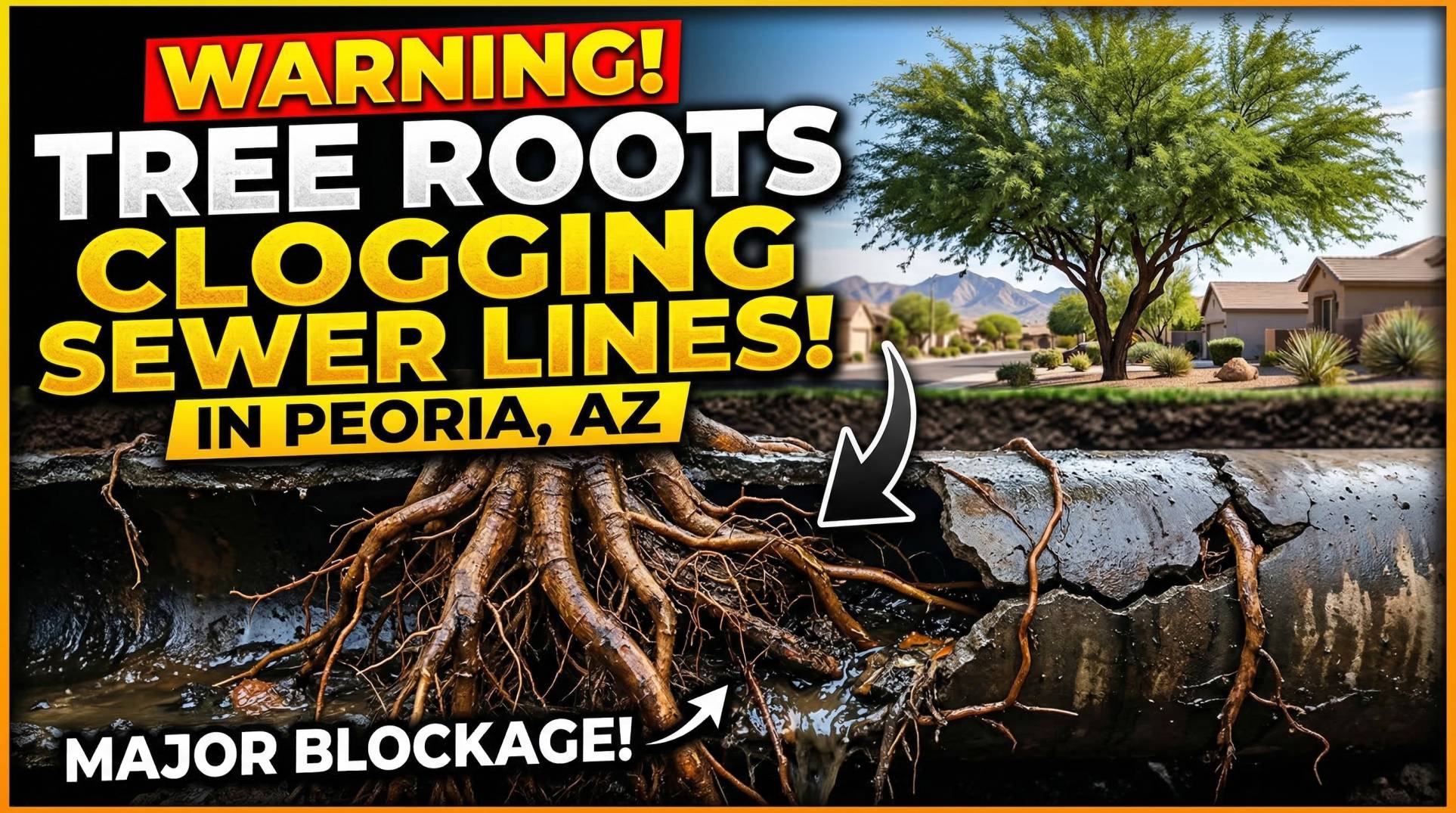
Tree roots invading sewer lines pose a serious threat to homeowners in Peoria, AZ, where mature trees thrive in the desert landscape but often damage underground plumbing. This comprehensive guide explains the causes, signs, and proven solutions to protect your property from costly repairs.
Why Tree Roots Target Sewer Lines
Tree roots naturally seek out moisture, oxygen, and nutrients to survive, making sewer pipes an irresistible target. In Arizona’s arid climate, the constant flow of wastewater inside pipes releases condensation and organic matter that draws roots like a magnet. Roots detect even tiny leaks or joints through water vapor escaping the soil, growing toward the source at rates up to one foot per day under ideal conditions.
Older homes in Peoria, built with clay, cast iron, or concrete pipes from the mid-20th century, suffer most because these materials develop cracks from ground settling, soil shifts, or corrosion over decades. Modern PVC pipes resist better but aren’t immune at connection points or if joints loosen. Once inside, fine “hair roots” expand into thick mats, latching onto debris like grease and hair, which worsens blockages.
Common Signs of Root Intrusion
Early detection prevents minor issues from escalating into sewage backups or pipe collapses. Frequent drain clogs in multiple fixtures, like sinks and showers slowing simultaneously, signal roots restricting flow deeper in the main line.
Listen for gurgling sounds in toilets after flushing, indicating air trapped by partial blockages, or notice sewage odors wafting from drains due to stagnant waste. Lush, unusually green grass patches over the sewer line path or sinkholes in the yard often mean roots have fractured pipes, allowing wastewater to seep out and nourish the soil above.
Toilet overflows without obvious indoor causes or backups in the lowest drains, like basement floor drains, confirm the problem originates in the lateral sewer line connecting your home to the city main. These symptoms typically worsen seasonally in Peoria’s monsoon periods when soil moisture fluctuations encourage aggressive root growth.
How Roots Damage Your Plumbing System
Roots enter through microscopic fissures as small as 1/16 inch, exploiting weak spots at pipe joints or bell ends where seals degrade. Inside, they swell with moisture, exerting hydraulic pressure that widens cracks and separates joints, leading to structural failure.
This creates two problems: immediate flow obstruction from tangled masses and long-term pipe degradation. Blockages cause backups that flood homes with raw sewage, risking health hazards from bacteria like E. coli and property damage costing thousands in cleanup. Fractured pipes leak effluent into surrounding soil, contaminating groundwater and potentially undermining home foundations if near the structure.
In Peoria’s expansive clay soils, root-induced shifts amplify settling issues, turning a $500 root cut into a $10,000+ full line replacement. Untreated intrusions recur within 6-12 months, as mother roots remain viable and regrow.
DIY Detection Methods
Homeowners can perform initial checks without professional tools. Pour a bucket of water mixed with a few drops of dish soap down the outermost drain; persistent bubbling or slow drainage suggests air pockets from roots. Use a wet-dry shop vac on the toilet rim with the lid down—if it pulls stubborn resistance, roots likely block nearby.
Trace your sewer line path using property records or a metal fish tape probe through a cleanout access point, feeling for unusual resistance beyond 50 feet. For visual confirmation, rent a drain camera from a local hardware store; snake it through a cleanout cap (often near the foundation or side yard) to inspect pipe interiors. Clear footage showing fibrous masses confirms roots over grease or scale buildup.
These steps empower you to verify issues before calling experts, avoiding unnecessary service fees. Always wear gloves and eye protection, as exposure to wastewater carries health risks.
Effective Removal Techniques
Cutting roots restores flow temporarily but doesn’t prevent regrowth—combine with prevention for lasting results. Mechanical root cutting uses a powered auger with a hardened steel cutter head inserted via cleanout, spinning at 500 RPM to shear roots without pipe damage. Professional units reach 300 feet, clearing mats in under 30 minutes.
Hydro jetting blasts roots with 4,000 PSI water jets from a flexible nozzle, flushing debris downstream while scouring interiors clean. This non-chemical method suits Peoria’s eco-conscious regulations and PVC pipes, lasting 6-12 months between treatments.
Chemical root killers like copper sulfate crystals dissolve roots on contact when flushed monthly, targeting active growth without digging. Apply 2 pounds via toilet, followed by 5 gallons of water; repeat quarterly. Safe for septic systems in moderation, but check local water district rules. Avoid foaming agents in main lines, as they may damage municipal pipes.
Prevention Strategies for Peoria Homes
Strategic landscaping minimizes risks without removing beloved trees. Install root barriers—rigid HDPE panels 24-36 inches deep buried between trees and sewer easements—during planting to deflect growth downward. Extend barriers 3 feet wide for willow or cottonwood species aggressive in Arizona soils.
Choose root-friendly trees like mesquite or palo verde, native to Peoria with shallow, non-invasive systems that thrive without supplemental water. Plant at least 10 feet from sewer paths, verified via as-built drawings from Maricopa County records.
Schedule annual professional inspections with sewer cameras every spring before monsoons, catching intrusions early. Aerate lawns away from lines to discourage surface rooting, and redirect downspouts to avoid saturating soil near pipes.
Pipe lining offers permanent protection: a cured-in-place epoxy sleeve reinforces interiors without excavation, rated for 50+ years. Ideal for Peoria’s aging suburbs, it seals cracks and smooths joints for $80-150 per foot.
Long-Term Solutions and Costs
For repeated issues, full sewer line replacement with PVC or HDPE trenchless pipe bursting avoids yard destruction, pulling new lines through old ones. Expect $100-250 per foot in Peoria, depending on depth and soil type.
Trenchless relining coats pipes with resin-impregnated felt, expanding to form a seamless new pipe. CIPP (cured-in-place pipe) suits 80% of root-damaged lines, completed in hours with minimal disruption.
Budget $4,000-15,000 for full laterals (50-100 feet), factoring permits from Peoria Public Works. Home warranties or financing through licensed plumbers ease upfront costs.
When to Call Professionals
DIY suits minor clogs, but pros handle main-line roots with warranties. Licensed technicians use truck-mounted equipment for jetting and cutting, plus locators to map lines accurately.
In Peoria, root issues peak post-monsoon; act fast to avoid backups during holidays. Emergency services restore flow in 2-4 hours, preventing mold and structural damage.
For reliable root removal in Peoria, AZ, contact Emergency Master Plumbing & Air at 623-584-4706. Their certified team specializes in Tree Roots Inside Sewer Lines – Peoria AZ, offering camera inspections, jetting, and lining with 24/7 emergency response.